

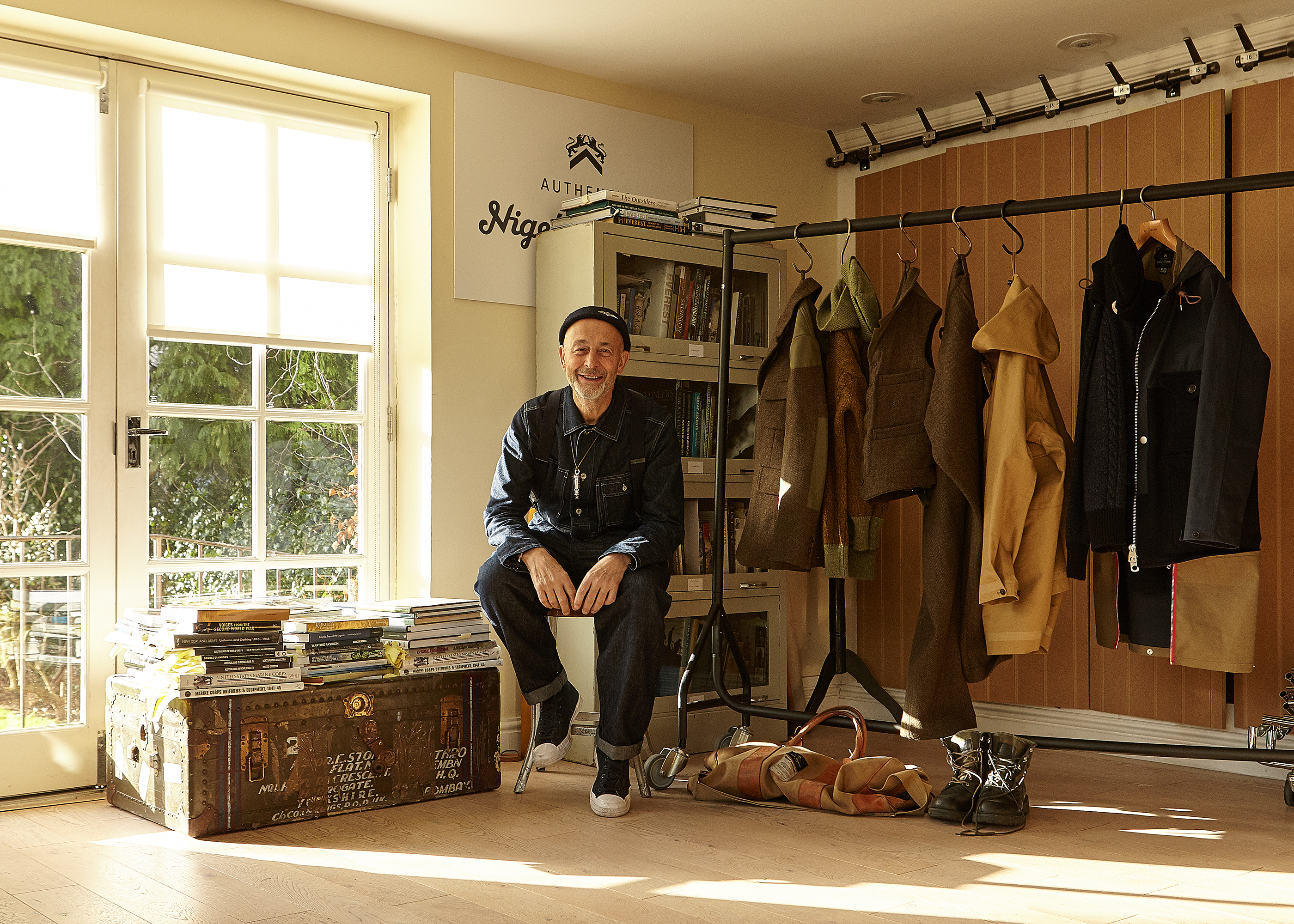
Nigel Cabourn, one of the most influential figures in contemporary workwear and military clothing, has passed away at the age of 77. He was not merely a clothing designer but part of that small group of individuals who helped shape the way we view vintage garments today. Alongside Paul Smith and Margaret Howell, Nigel Cabourn belongs to that generation of British designers whose work found a particularly strong resonance in Japan.
His work never sought to follow the movement of fashion. Instead, it aimed to shift the perspective: understanding a garment not for what it represents, but for the function it was originally designed to fulfill.
Nigel Cabourn did not invent vintage clothing; he helped restore its meaning.
The Early Years
Born on October 7, 1949, near Scunthorpe, he grew up in Peterlee, County Durham, a new town in northern England shaped by a post-war environment where utilitarian everyday clothing remained deeply present.
His entry into the world of clothing did not come immediately through vocation. He discovered design while studying at the Newcastle College of Art and Industrial Design (now Northumbria University) between 1967 and 1971. During this period, he launched his first brand, Cricket, in 1969.
Unlike many designers of his generation, he chose to remain based in Jesmond, near Newcastle, far from London and its industrial and media center of gravity.
This geographical choice, considered unconventional at the time, would help shape a singular career path outside the traditional framework of British fashion.
In hindsight, this distance from the London fashion system appears entirely consistent with his approach: observing garments through their real-world uses rather than through trends.
Nigel Cabourn often rejected the label of "fashion designer." He preferred to describe himself as a "clothing designer," believing that a garment's purpose was not to follow trends but to meet a need. A seemingly simple distinction that sheds light on his entire body of work.
The Collection
Before becoming a designer, Cabourn was a collector.
What makes his journey particularly fascinating is that he began collecting and documenting military, workwear, and expedition garments at a time when they were not yet considered objects of clothing culture.
His personal archive eventually grew to more than 4,000 pieces, becoming one of the largest private collections in the industry. Military uniforms, workwear, expedition clothing, and technical garments designed for extreme environments—yet this collection was never intended as a museum.
Instead, it functioned as a living library in which every garment represented a fragment of a solution: how to survive the cold, resist wear, carry equipment, protect the body, and endure over time.
For Nigel Cabourn, military archives represented only part of the story. The great British expeditions of the twentieth century occupied an equally important place in his work.
From Arctic explorers to the earliest attempts to conquer Everest, garments designed to withstand cold, wind, and altitude became a major source of inspiration. Several of his most iconic creations, including the Cameraman Jacket, Mallory Jacket, and Everest Parka, originated directly from this research.

Cameraman Jacket (credit: cabourn.com)
 Everest Parka (credit: cabourn.com)

Nigel Cabourn wearing his Mallory Jacket (credit: Heddels)
Japan
For Cabourn, the connection with Japan was never the result of a commercial strategy but rather a natural convergence: a shared attention to materials, construction methods, precision of detail, and faithfulness to original garments.
His work was recognized and collected in Japan from an early stage, where he became a reference point for an entire generation of brands and craftsmen.
A significant portion of his collections would later be produced in the country, in workshops specializing in Japanese workwear and historical garment reproduction.
This dialogue between industrial England and manufacturing Japan became one of the foundations of his clothing language.
Future Vintage
The term "Future Vintage" is often used to describe his approach.
It is more than a concept; it is a genuine philosophy. Creating garments today with the same rigor found in archival pieces naturally leads to the creation of objects that future generations may view as witnesses to their own era.
Time itself thus becomes an integral part of the creative process.
Through this philosophy, Nigel Cabourn's influence extends far beyond his own collections and into a broader way of thinking about clothing: slower, more documented, and more attentive to practical use.
Its impact can be seen in the evolution of contemporary workwear, historical reproduction garments, certain Japanese interpretations of technical clothing, and even within a segment of modern menswear that moves away from fashion trends and returns to original function.
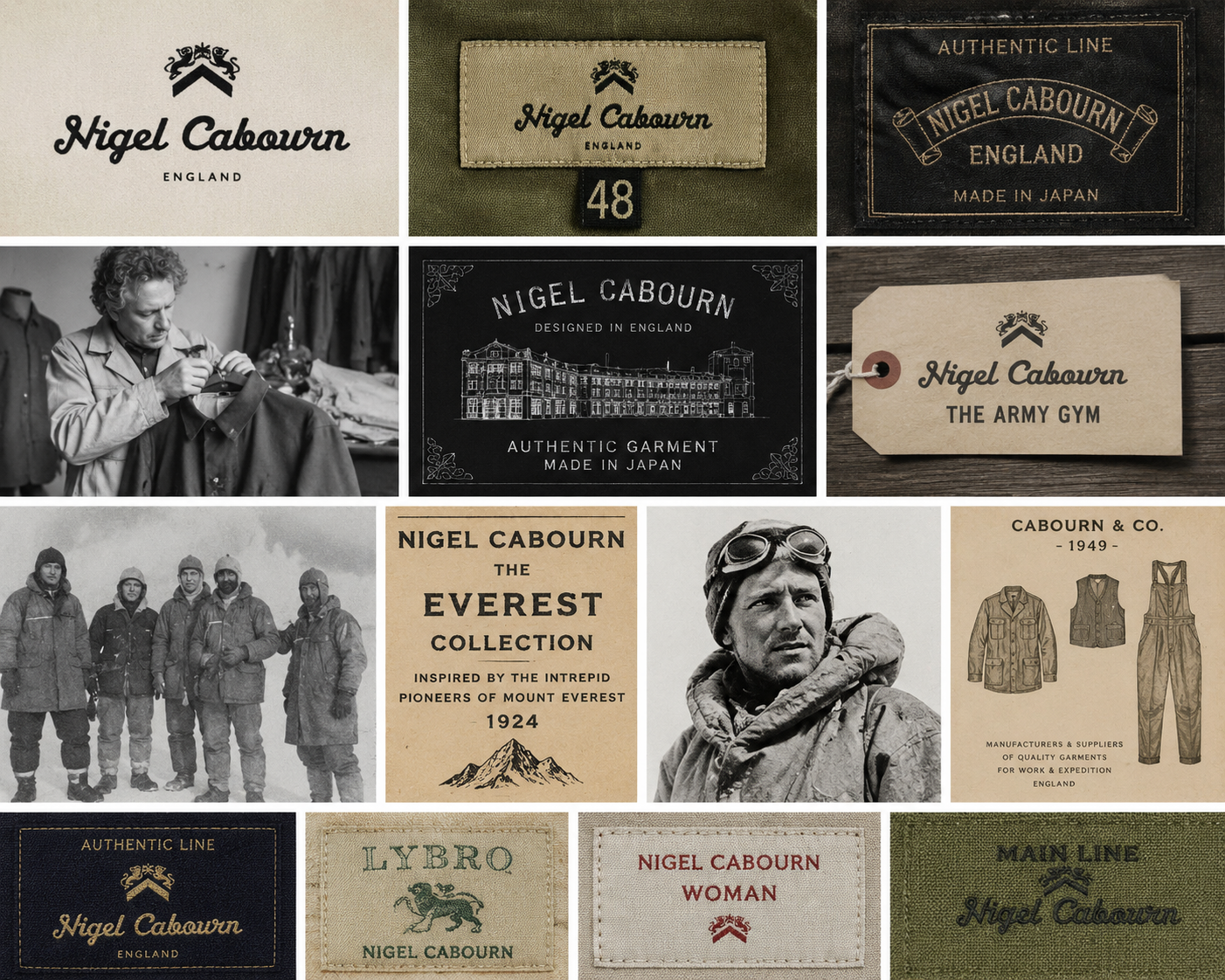
Coming Soon at Flâneurs
Adding Nigel Cabourn to the Flâneurs selection represents far more than introducing a new brand to our catalogue. It is the recognition of a shared perspective—one that connects garments to their uses, objects to their stories, and materials to their context.
Within this space where military heritage, British culture, and Japanese craftsmanship intersect, his work occupies an obvious place. More than a collection of clothing, he leaves behind a way of understanding why certain garments endure through decades without ever losing their relevance.
We are delighted to welcome the very first Nigel Cabourn selection for the Fall/Winter 2026 season.