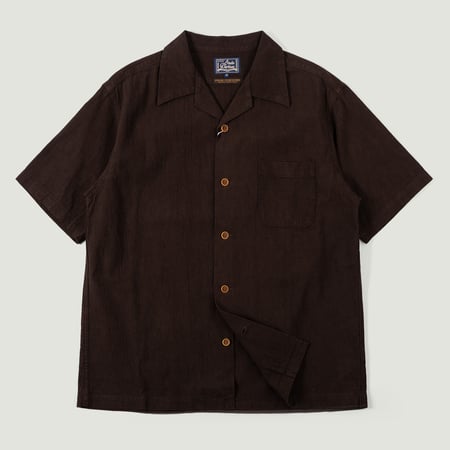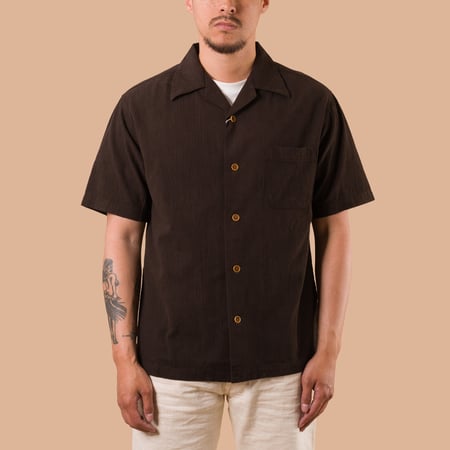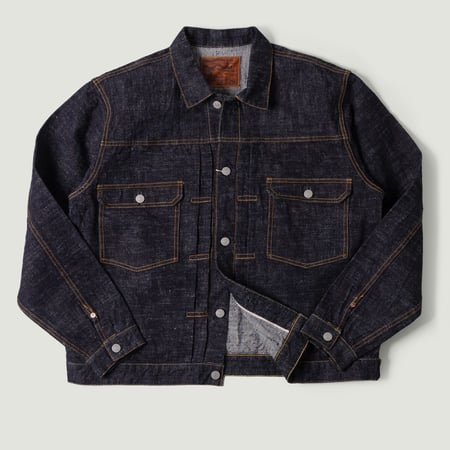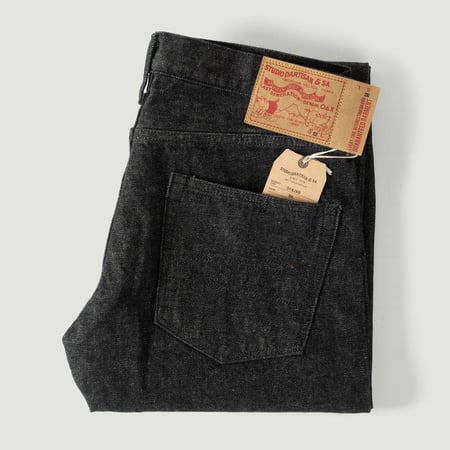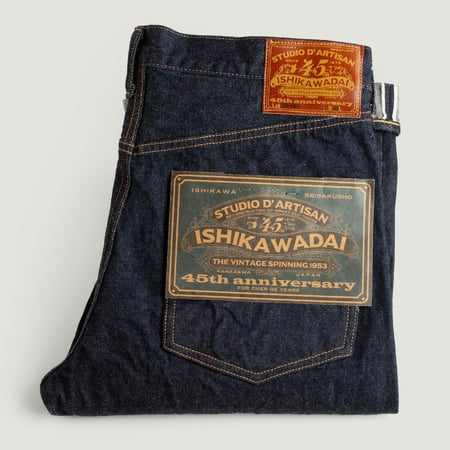




Founded in Osaka in 1979 by Shigeharu Tagaki, Studio D’Artisan, often abbreviated to SDA, is one of the pioneers of Japanese denim. After working in fashion in France, Tagaki returned to Japan with the ambition of recapturing the character of classic American jeans from an era before their production became widely industrialised.
Studio D’Artisan turned to Japanese textile expertise and the vintage shuttle looms still operating in the Okayama region. In 1986, the brand notably introduced its famous DO-1, made from natural indigo selvedge denim. Rather than precisely reproducing a vintage pair of jeans, SDA used historic garments as a starting point from which to develop its own fabrics, constructions and details.
This philosophy remains central to the brand. Over the years, Studio D’Artisan has considerably expanded its exploration of Japanese textiles, with natural indigo, sashiko, dobby and jacquard weaving, traditional dyeing techniques and distinctive cotton varieties regularly complementing the selvedge denim on which its reputation was built.
Studio D’Artisan is also regarded as the first of the celebrated Osaka Five, alongside Denime, Evisu, Fullcount and Warehouse. Together, these five brands played an important role in Japan’s vintage denim revival and in the development of what would gradually become an international culture surrounding Japanese denim.
Despite this highly demanding approach to manufacturing, SDA has always retained a sense of humour, symbolised by the two pigs in its logo, a playful reinterpretation of the famous two-horse patch found on historic American jeans. More than forty-five years after its creation, Studio D’Artisan continues to bring together Americana, Japanese craftsmanship and textile experimentation without limiting itself to simply reproducing the past.