

Toyoda G3 & GL3: The Shuttle Looms Behind Exceptional Selvedge Denim
At the heart of the Japanese textile industry, certain machines have achieved an almost legendary status. The Toyoda G3 and GL3 shuttle looms are among the most iconic tools used in the production of premium selvedge denim. Direct descendants of Sakichi Toyoda's groundbreaking inventions, they produce rare, irregular, and deeply expressive fabrics sought after by enthusiasts of authentic denim.
An Industrial Legacy Born from Sakichi Toyoda
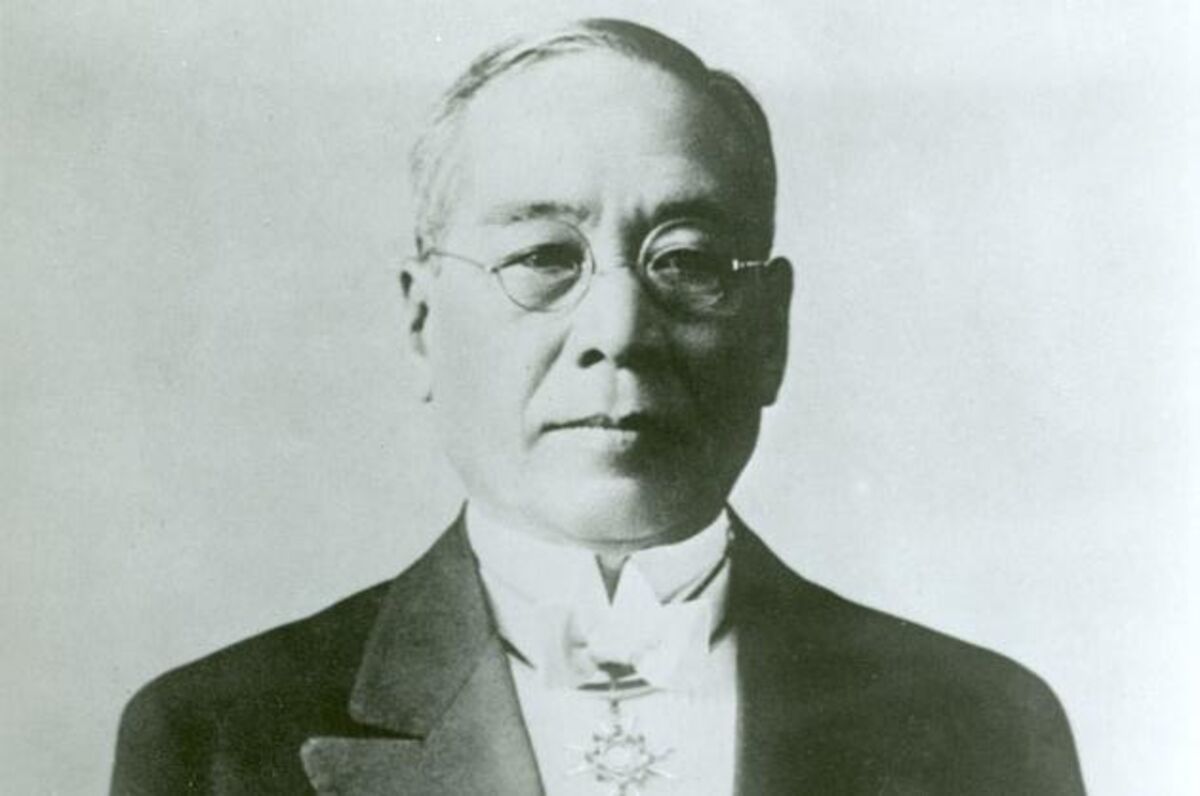
The story begins with Sakichi Toyoda, the inventor of the famous automatic loom in the early 20th century. In 1924, he developed the Type G Automatic Loom, a major innovation featuring automatic thread-break detection and an automatic shuttle-changing mechanism.
This expertise eventually led to the creation of the Toyoda G-Series looms, from which the G3 and GL3 models used by certain Japanese denim mills today are derived.
Shuttle Loom Weaving and the Selvedge Principle
Before going further, it's important to understand the basics. The G3 and GL3 are what are known as shuttle looms, used specifically to produce selvedge denim.
The principle is simple, but demanding:
- Warp yarns are tensioned lengthwise across the loom
- A shuttle travels horizontally through the loom carrying the weft yarn
- The back-and-forth motion allows the fabric to be woven continuously from edge to edge without being cut
 |
 |
 |
This process naturally creates a clean self-finished edge on both sides of the fabric, known as the selvedge, the signature feature of premium denim. Denim produced on G3 and GL3 looms embodies the Japanese philosophy of selvedge denim: a fabric designed to evolve, fade, and transform over time.
This philosophy is what separates Japanese production from conventional industrial denim. Here, imperfections are not corrected; they are embraced and elevated, creating fabrics with unique character and distinctive irregularities that simply cannot be reproduced on modern projectile or air-jet looms. Those machines prioritize speed and volume, operating in fully automated weaving facilities designed for mass production.
Toyoda G3: A Rare Machine at the Heart of Japanese Denim
The Toyoda G3 is considered one of the oldest shuttle looms still operating in the Japanese textile industry. Only a handful remain active today, most of them located in the Okayama region.
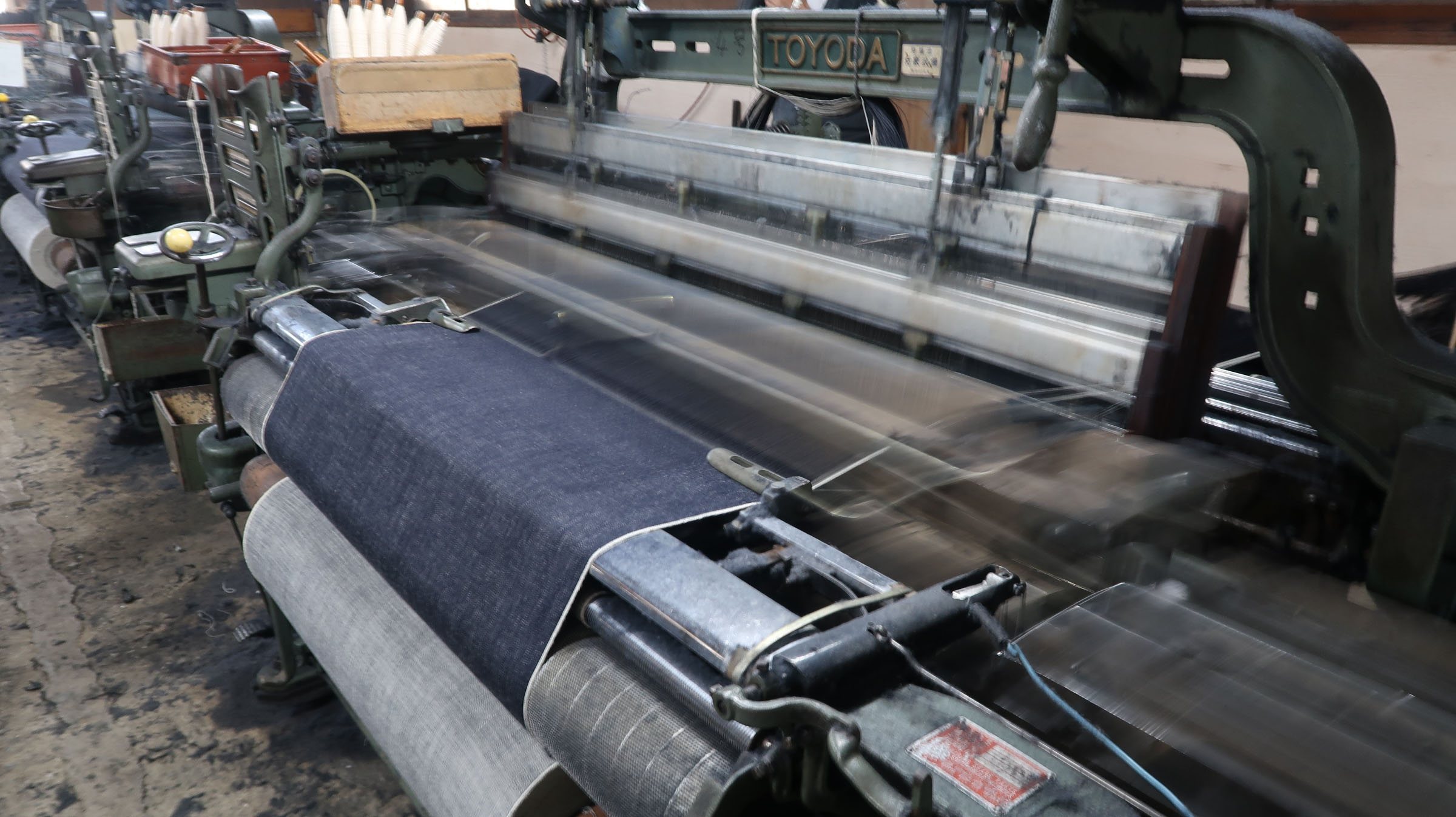
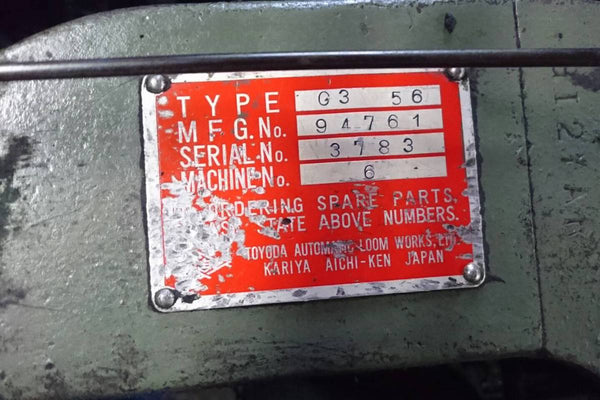
Toyoda G3 Shuttle Loom, Okayama
Slow and Traditional Production
A G3 loom produces roughly 5 meters of fabric per hour, making it extraordinarily slow by modern industrial standards. This deliberate slowness reduces the tension applied to the cotton yarns, allowing the fabric to develop greater irregularity, depth, and character.
The machine operates entirely mechanically, without electronic assistance or modern automation, which reinforces its traditional nature. It was never designed with contemporary productivity in mind; the priority is always the quality of the weave.
Maintenance is particularly challenging because original parts have become extremely rare, if not impossible to find. Many mills rely on handcrafted solutions to keep these machines running. The artisans dedicated to maintaining them are often highly experienced specialists who know the looms so well that they can identify mechanical issues simply by listening to the sound of the machine.
A Denim with Unique Character
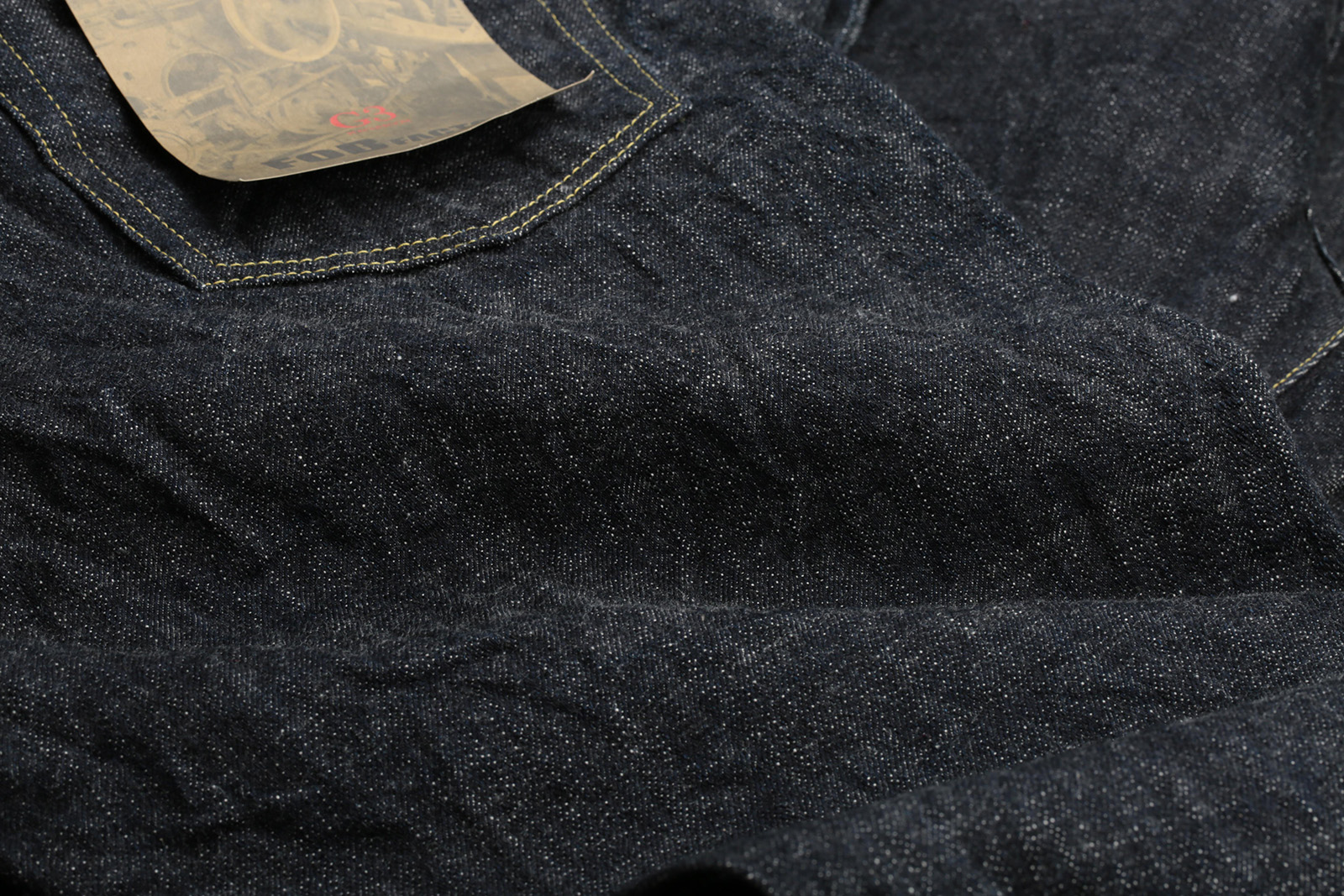
FOB Factory x Flâneurs Collaboration FFR001 G3 Denim
G3 denim is instantly recognizable thanks to the character inherited from these historic Japanese shuttle looms. Its surface is rich in irregularities, combining slub yarns and neps to create remarkable visual depth. From the very first wear, its dry and authentic hand evokes vintage denim, offering a sense of robustness and natural texture that modern fabrics struggle to replicate.
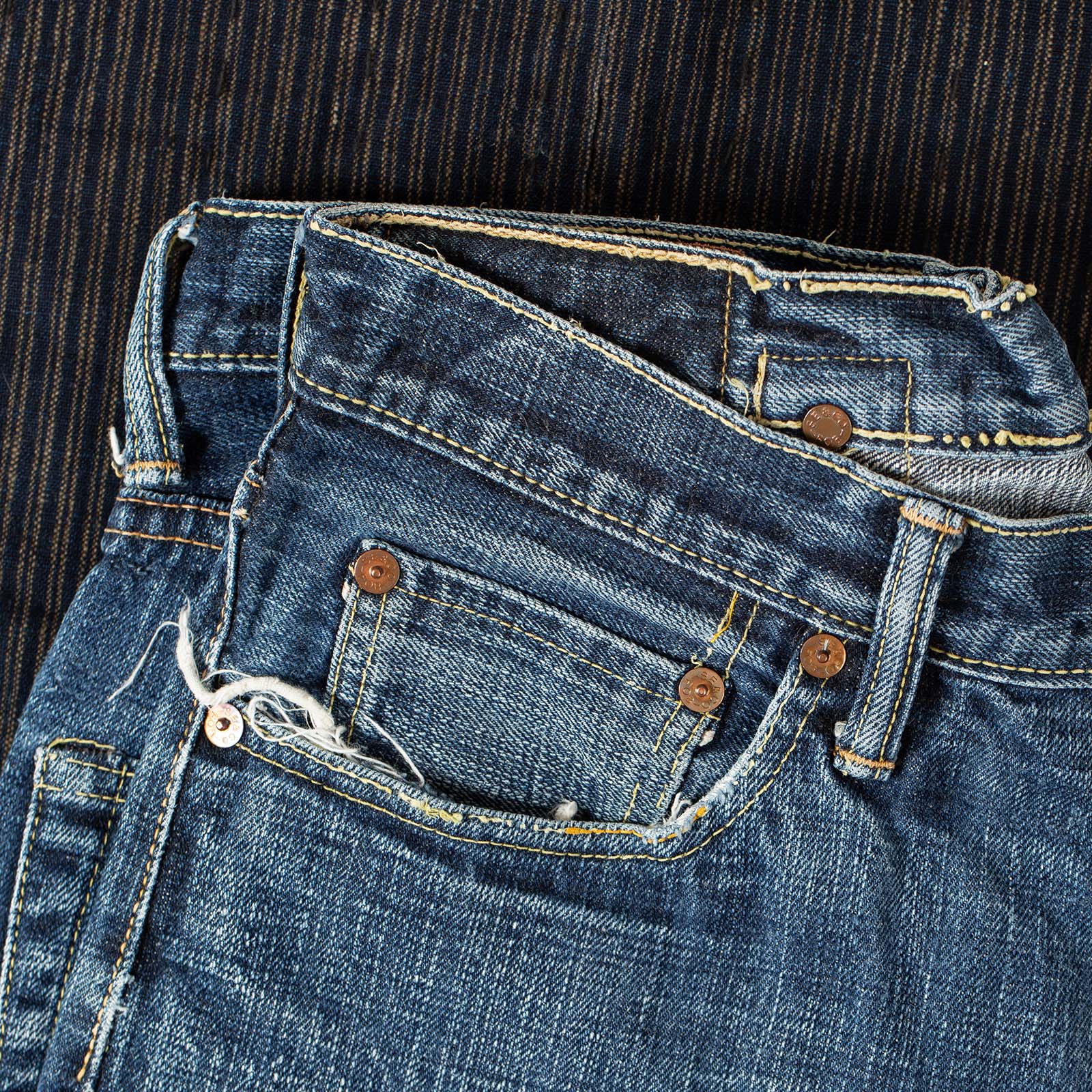
Dyed in a deep indigo, it develops a highly expressive patina over time, with the shades of blue gradually evolving to highlight the texture of the weave. This combination of texture, density, and dyeing creates spectacular aging, marked by strong contrasts and a personality that becomes more pronounced with every year of wear.
A perfect example is our collaborative model, the FOB Factory x Flâneurs FFR001 G3 Denim, which we featured in a dedicated fades article.

 |
 |
GL3: A More Stable Evolution of Traditional Weaving
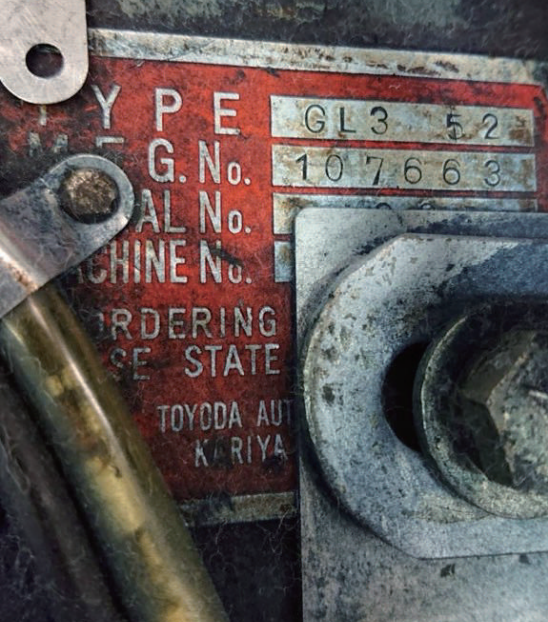 Toyoda GL3 Shuttle Loom, Okayama
The term GL3 refers to a modern evolution of the famous G3 loom, developed by certain Japanese mills to preserve the visual qualities of traditional denim while achieving greater production consistency. This improved version benefits from enhanced mechanical stability, resulting in fabric that is more consistent from one roll to another without sacrificing the character associated with shuttle-loom weaving.
Productivity is also slightly higher than on a traditional G3, offering a better balance between efficiency and craftsmanship.
Despite these technical improvements, the GL3 retains the essential qualities that make Japanese character denim so appealing: lively texture, visual depth, and an authentic appearance. It represents a compelling compromise between the highest level of craftsmanship and the quality standards required for modern production.
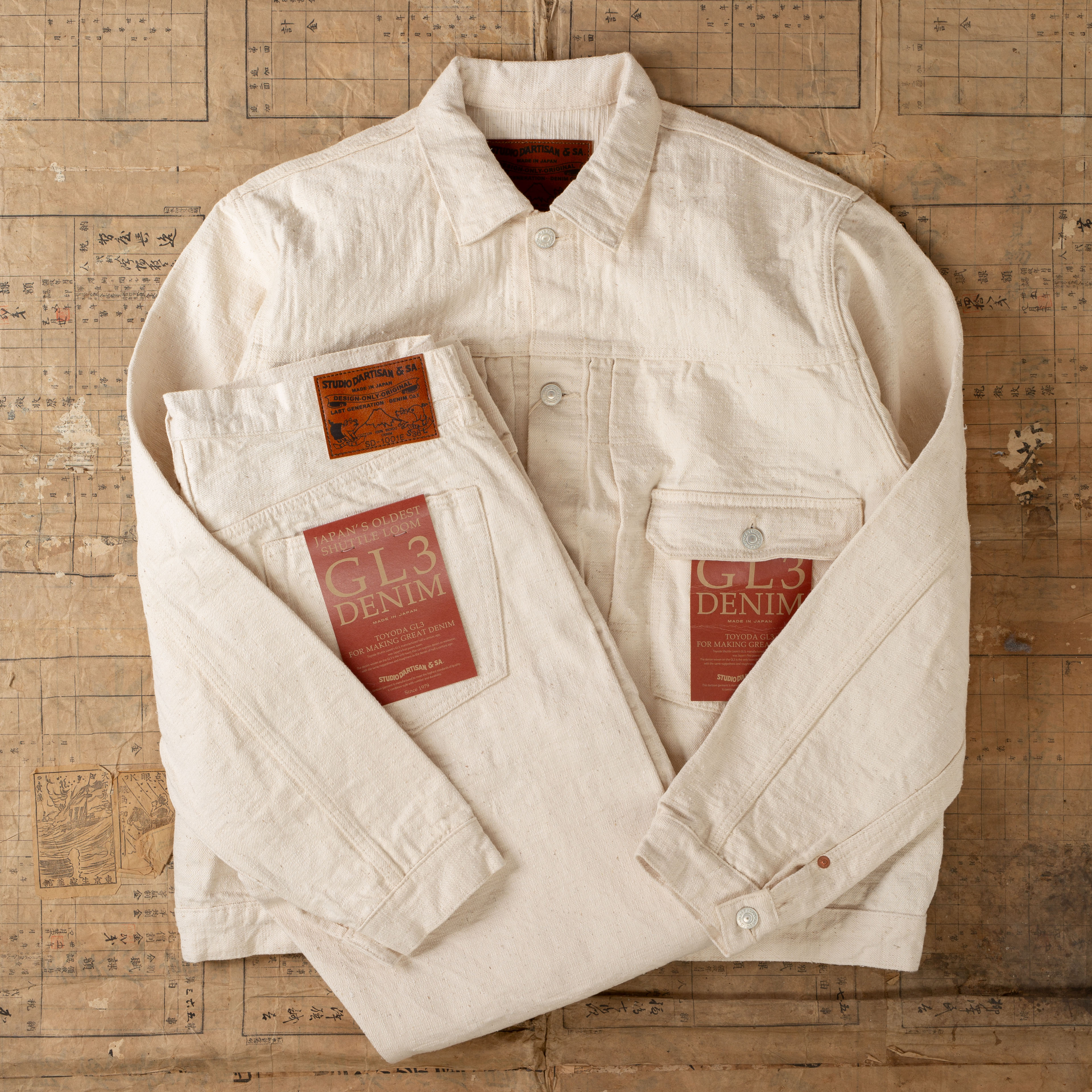
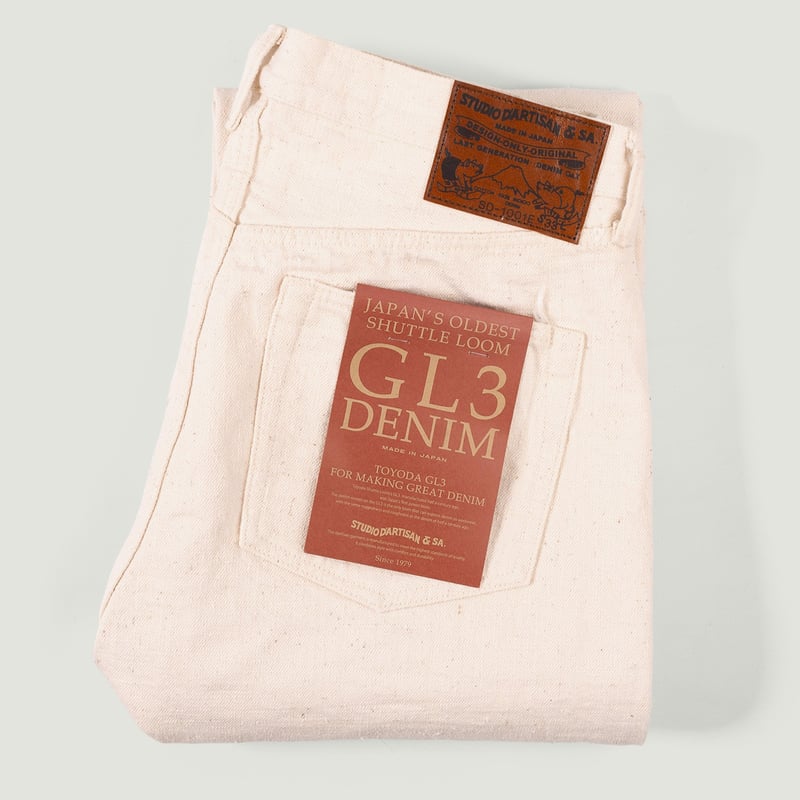
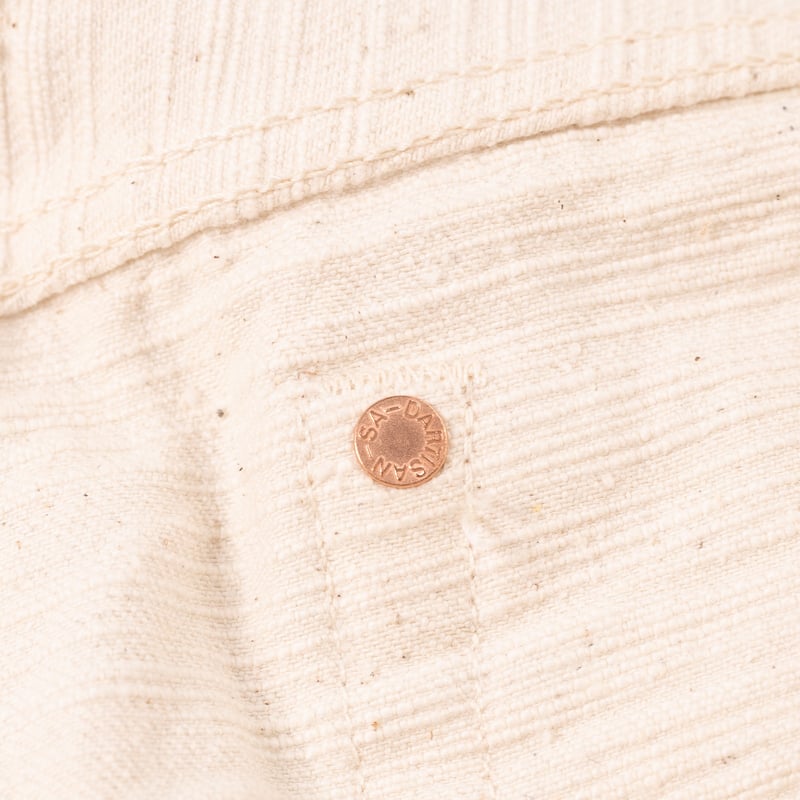
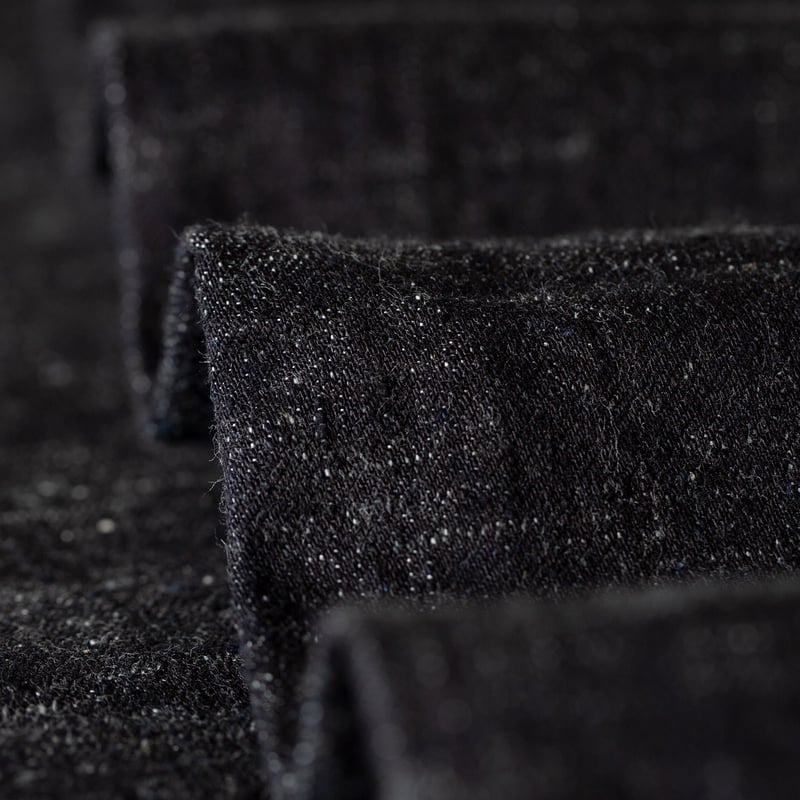
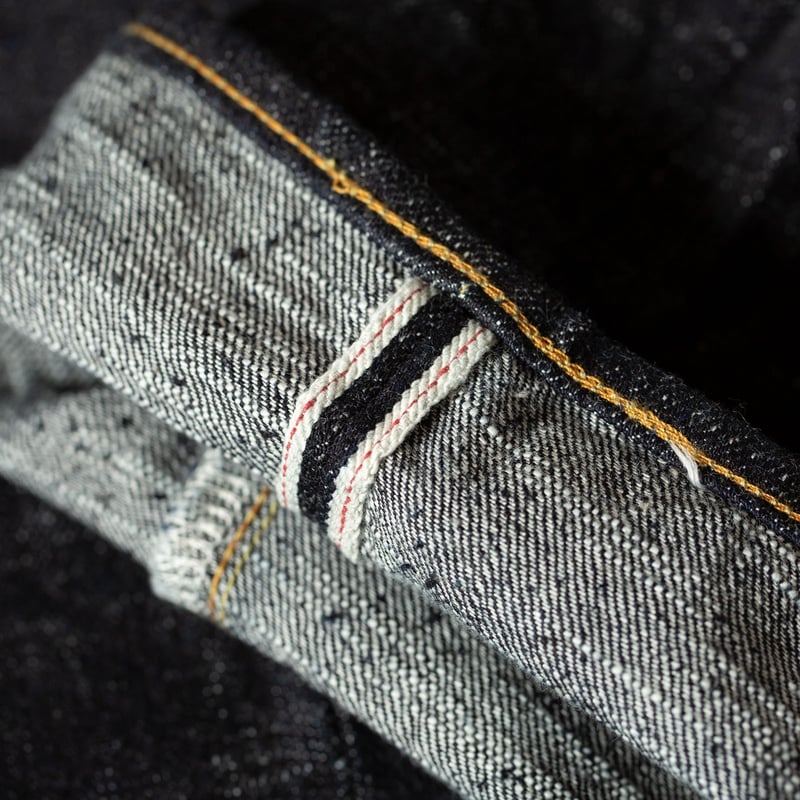
Some Japanese brands build entire collections around this loom, such as Studio D'Artisan, whose GL3 fabrics push texture to impressive levels and showcase the technical potential of denim woven on these machines.
Studio D'Artisan GL3 Ecru
 |
 |
Studio D'Artisan GL3 Indigo

 |
 |
These highly textured examples do not represent the only possible outcome. The final appearance of a GL3 fabric depends on many factors:
- Cotton spinning method and yarn thickness
- Fiber irregularity
- Weaving tension settings
- Dyeing process
- Pre-washing treatment
GL3 looms are also capable of producing smoother and more regular-looking fabrics when that is the desired result. The common characteristics remain the weaving speed, the distinctive grain associated with selvedge denim, the unquestionable quality, and the impossibility of reproducing these fabrics on modern high-speed looms.
All of these factors together answer an obvious question: why are these old, demanding machines still used today?
In a textile world dominated by speed and standardization, G3 and GL3 looms survive because they produce a premium selvedge denim that cannot be replicated by modern machinery — a fabric designed to become more beautiful with age and accompany its wearer for many years, even in the harshest conditions.
The Toyoda G3 and GL3 looms embody a vision of denim in which slowness becomes a strength and the machine reveals character rather than standardizing it. In a textile industry driven by speed, they remind us that the most remarkable fabrics are often born from old, demanding, and imperfect processes.
The selvedge denim produced on these machines is therefore not just a product: it is a living, expressive material shaped by time and by the specialized artisans who continue to preserve a form of craftsmanship that has become increasingly rare. Passing this expertise on to future generations is becoming more difficult, while the industry moves toward ever faster, larger-scale, and more competitive production, often at the expense of quality and the human element behind it.