

Denim History: The Iconic Dates and Designs That Continue to Inspire
Before becoming a fashion staple, denim was a living textile archive. Every era has left its mark on its construction: a fit, a fabric, a detail. These variations, now regarded as historical milestones, continue to be studied and reproduced with near-archaeological precision, particularly in Japan.
At Flâneurs, this appreciation of jeans as cultural artifacts comes to life through our selection of brands such as Sugar Cane, TCB Jeans, Denime, Warehouse & Co., and FOB Factory, all of which faithfully reinterpret these iconic designs and elevate them through unparalleled craftsmanship.
Iconic Jeans: From Workwear to Cultural Artifact
1873 – The Birth of the Modern Jean
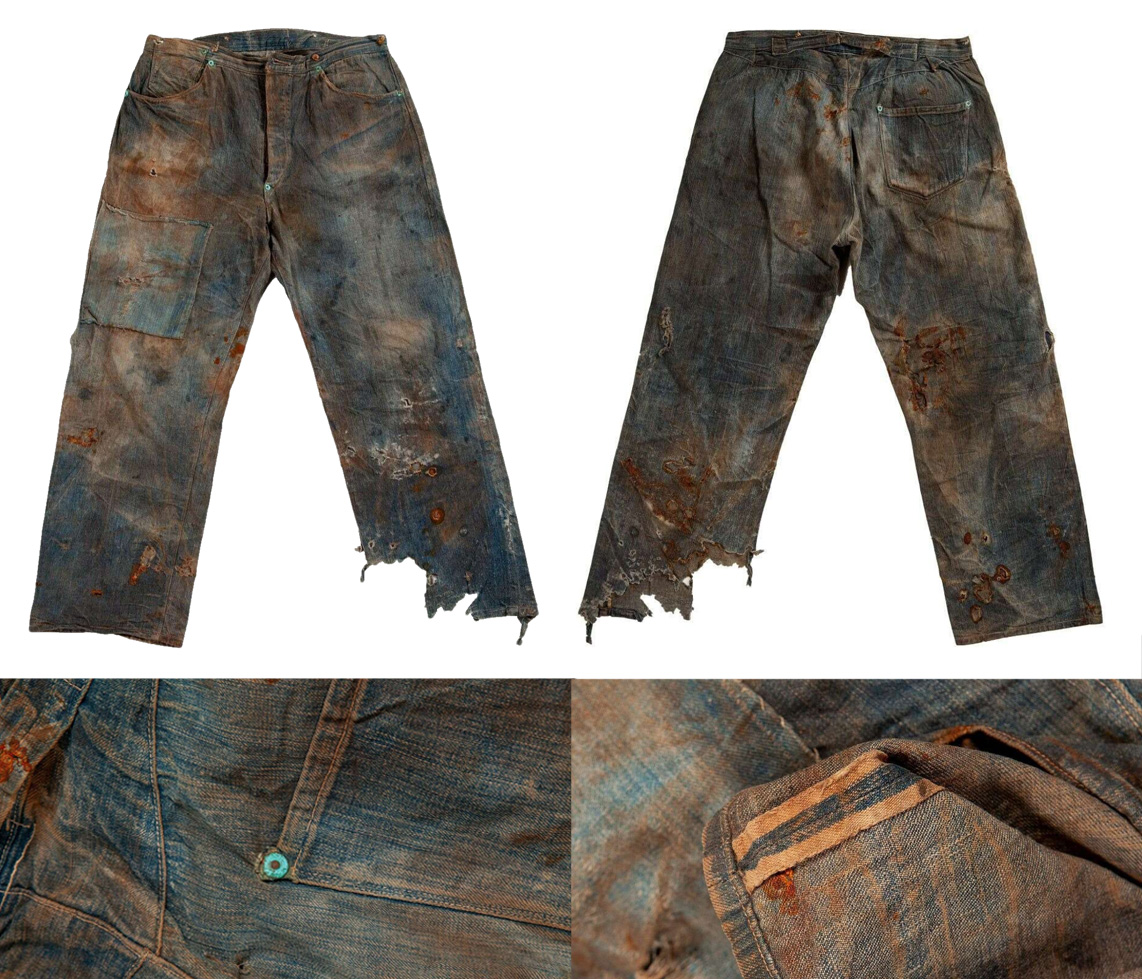 Jeans found in a Nevada mine and sold at auction in 2022 for $100,000
The jean as we know it today was born in 1873, notably with the introduction of patents such as the one covering metal rivets. Patented on May 20, 1873, this innovation—which used metal rivets to reinforce common stress points on trousers, particularly pocket openings and seams—solved the long-standing problem of garments tearing under strain. Designed to last, jeans quickly became the preferred garment of American workers. They were defined by:
- Durable raw denim fabric
- A comfortable straight-leg fit
- A practical high-rise waist
- Functional details such as cinch backs and suspender buttons
A foundational design that continues to inspire the most faithful reproductions today. However, being quite different from the more "modern" jean format we know today, relatively few brands focus on this particular era. We are fortunate to work with TCB Jeans, a Japanese label specializing in archive-based reproductions that strive to recreate the defining characteristics of a specific period as accurately as possible.
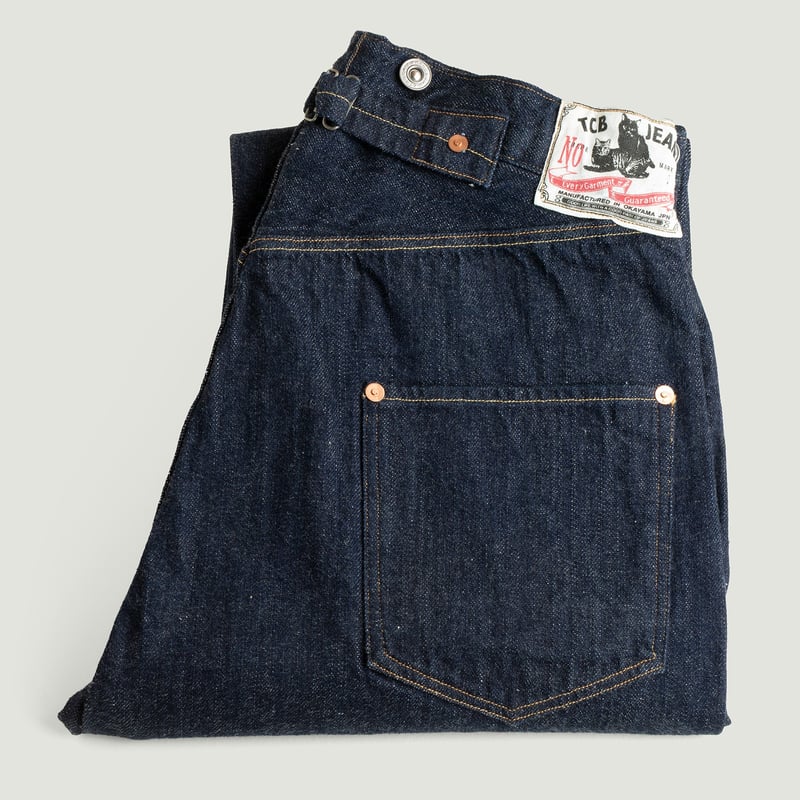
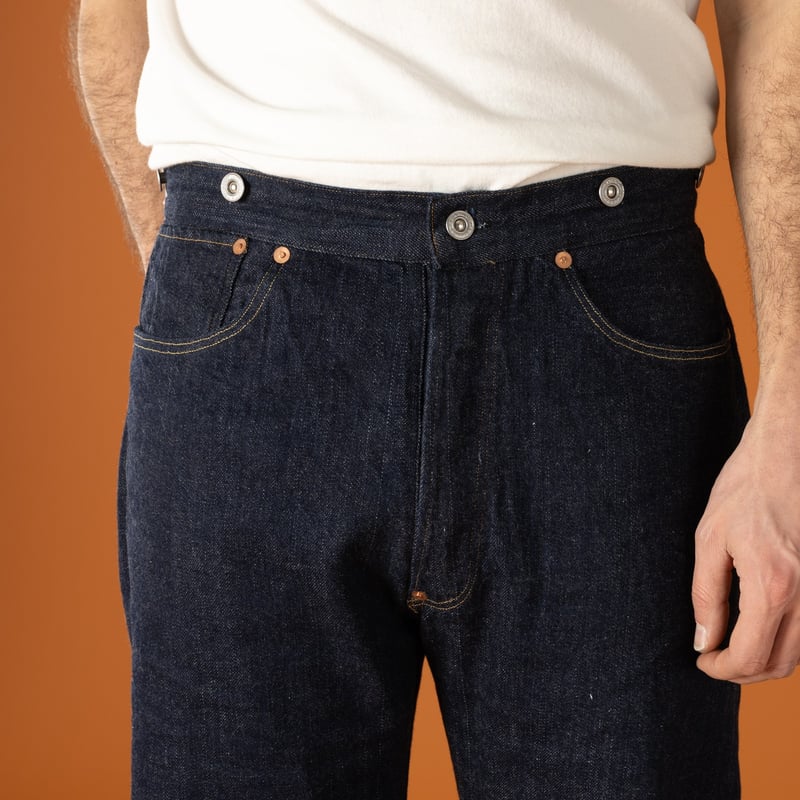
One example is the No.2 1890, one of the most accomplished models we have had the opportunity to showcase, developed from meticulously researched archival references.
 |
 |
1928 – The Invention of Sanforization
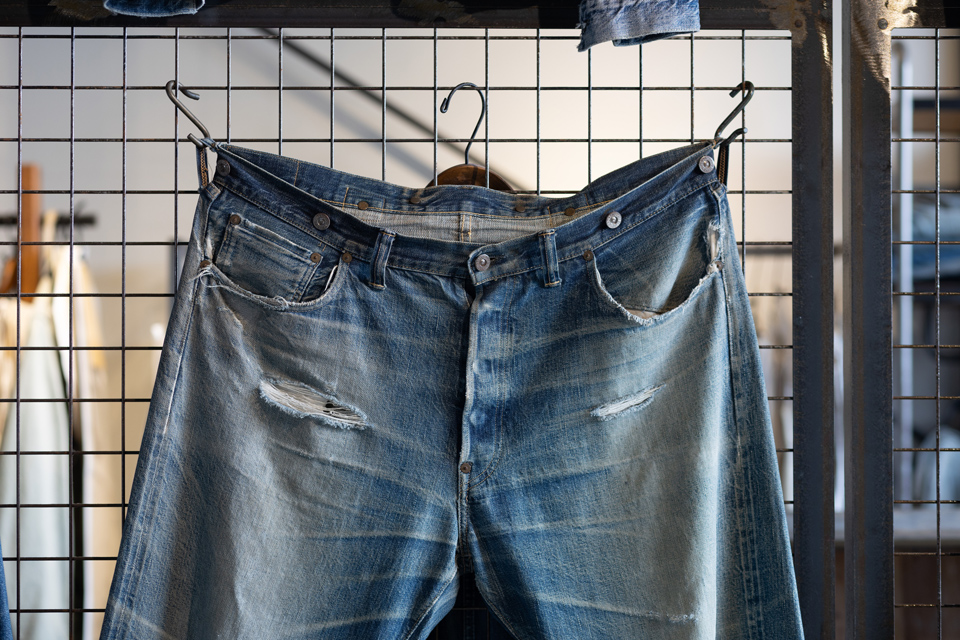
Sanforization (a cotton pre-shrinking process), patented in the late 1920s by Sanford L. Cluett and gradually adopted over the following decades, marked a decisive turning point in the history of denim and workwear more broadly.
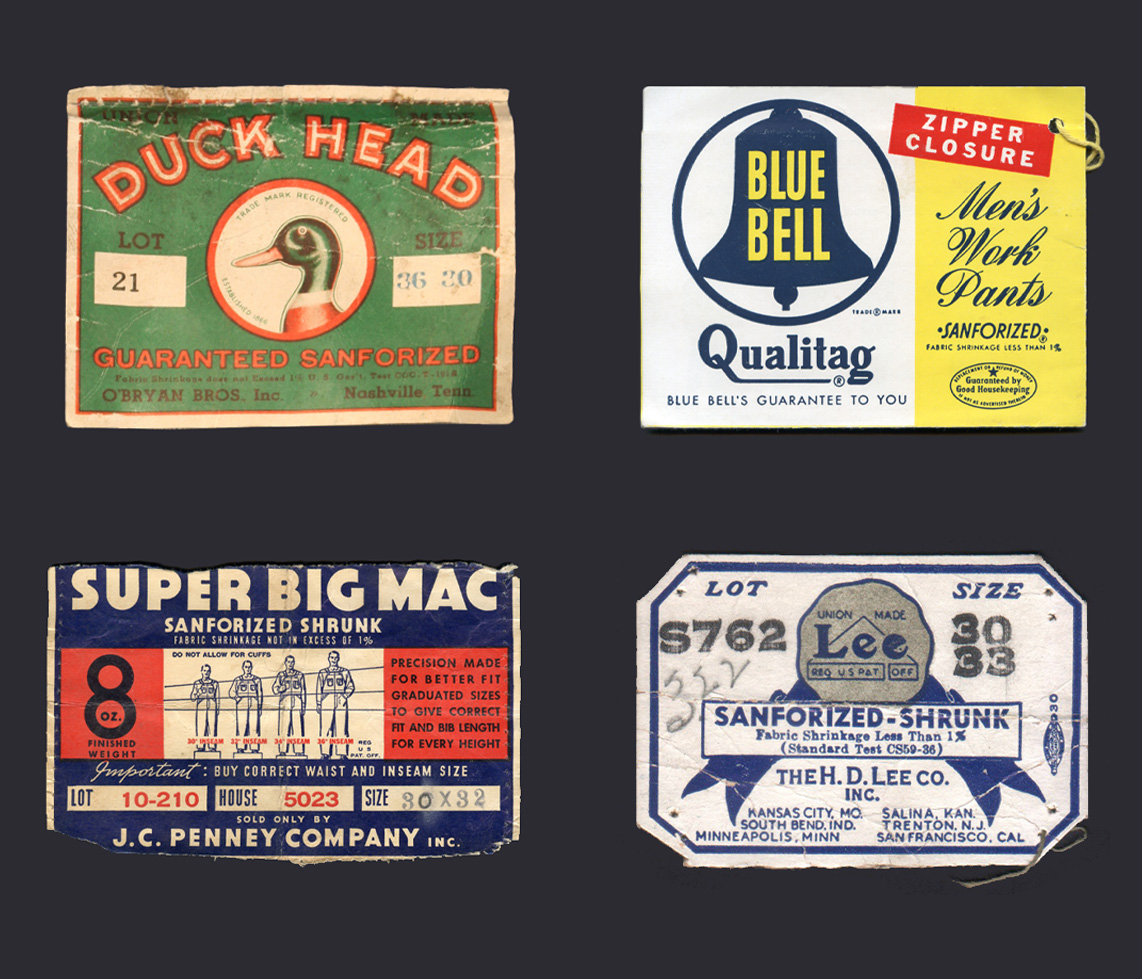 "Sanforized" labels (Credits: https://union-made.blogspot.com)
By stabilizing cotton before garment production, the process introduced a new level of sizing standardization to the textile industry. Whereas untreated denim could shrink unpredictably through wear and washing, sanforization brought a degree of industrial control that facilitated mass production and made ready-to-wear garments more reliable.
1937 – A Pivotal Year of Functional Refinements
The year 1937 occupies a significant place in denim history, as it marks several major developments that helped define the modern jean as we know it today.
The most famous concerns Levi Strauss & Co. and the legendary 501. Following customer complaints about metal rivets scratching furniture, horse saddles, and seats, the company decided to cover the rear pocket rivets. This modification preserved the garment's durability while making it more practical for everyday use. It was during this period that the concept of hidden rivets emerged.
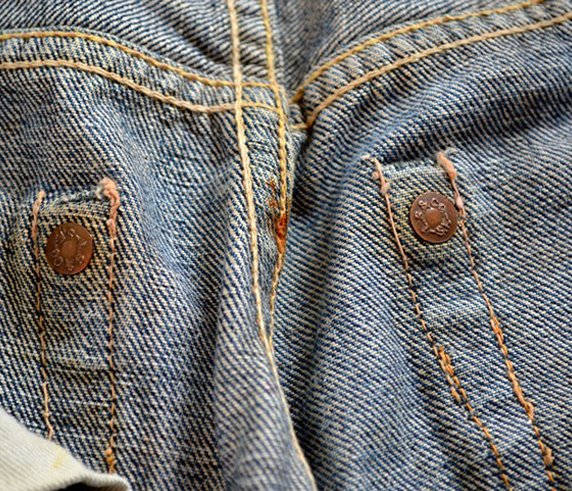
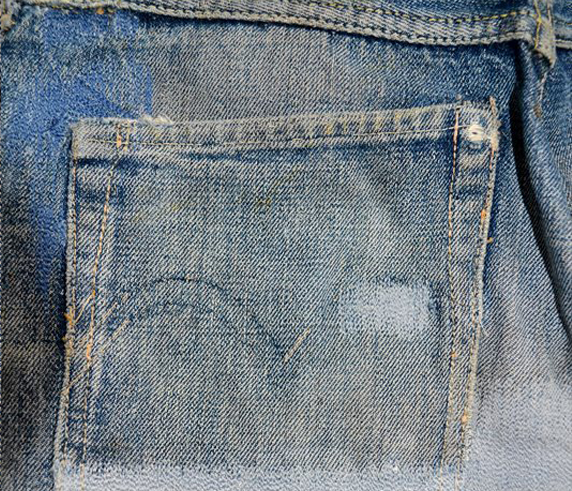 Hidden rivets on a 1937 Levi's (Credits: long-john.nl)
1937 also represents a turning point during which jeans gradually evolved beyond their status as simple workwear. Thanks to the growing popularity of tourist ranches ("dude ranches") across the American West, jeans began to be adopted by urban consumers seeking authenticity and a taste of the Western lifestyle. Denim thus entered American popular culture well before the post-war boom that would make it a global phenomenon.
1942–1945 – World War II and the Era of Restrictions
World War II began in 1939, but the United States did not enter the conflict until December 1941, following the attack on Pearl Harbor. The denim industry was significantly affected from 1942 onward, when wartime restrictions were implemented. Between 1942 and 1945, jeans were simplified to conserve metal, cotton, thread, and manufacturing time, while civilian production declined in favor of military needs. After 1945, these constraints were gradually lifted, and 1947 marked the return of classic specifications and the iconic details associated with vintage denim.
Jeans from this period are therefore more austere and easily recognizable thanks to specific characteristics such as:
- The removal of certain non-essential rivets
- The disappearance or simplification of decorative details, including pocket bags made from assorted fabric remnants
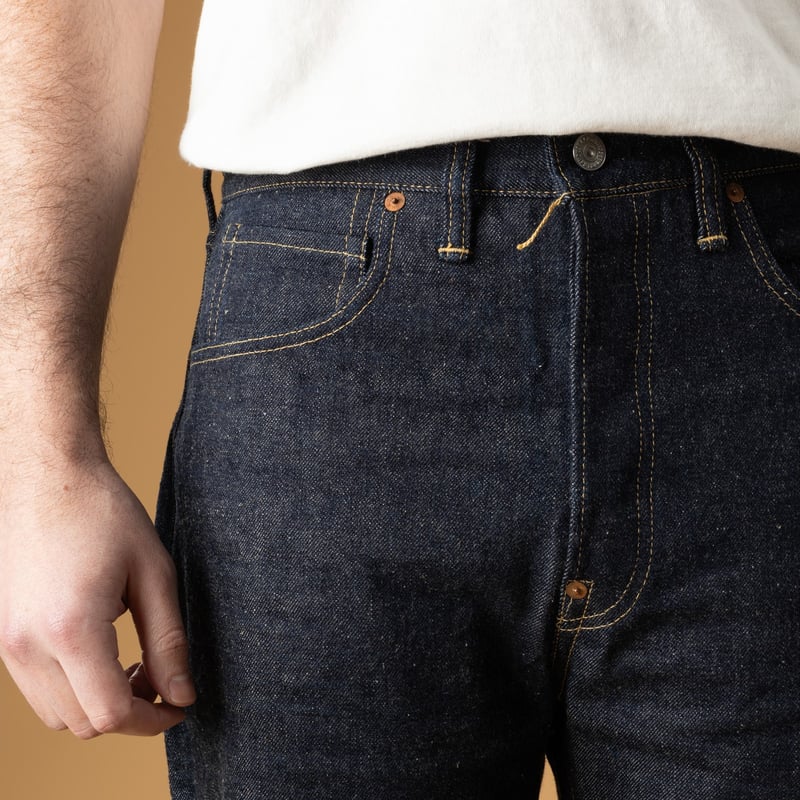
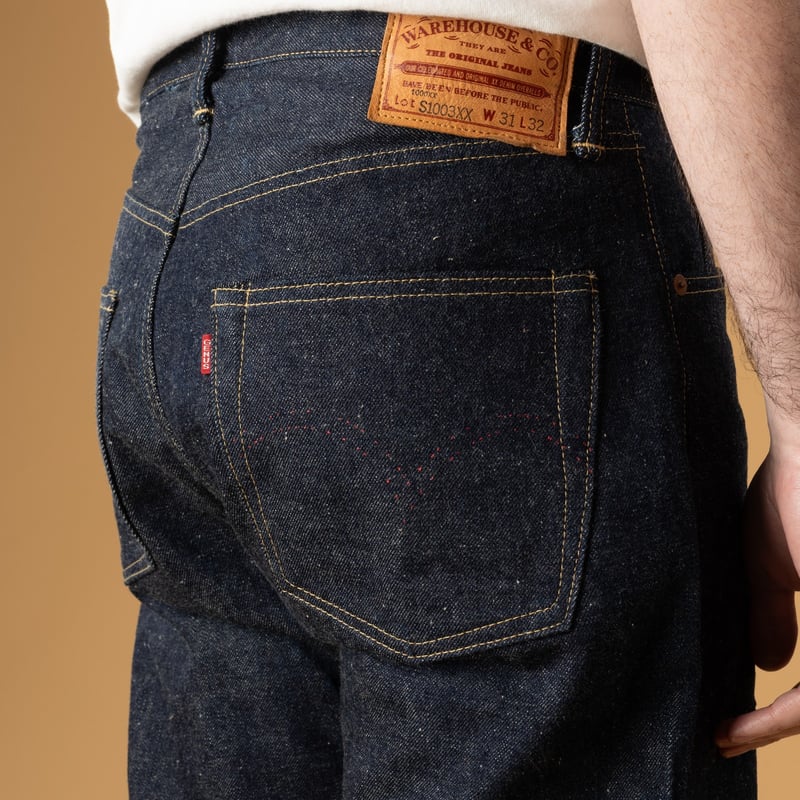
- Modifications to the famous pocket arcuate, which was often no longer stitched and replaced with painted markings instead
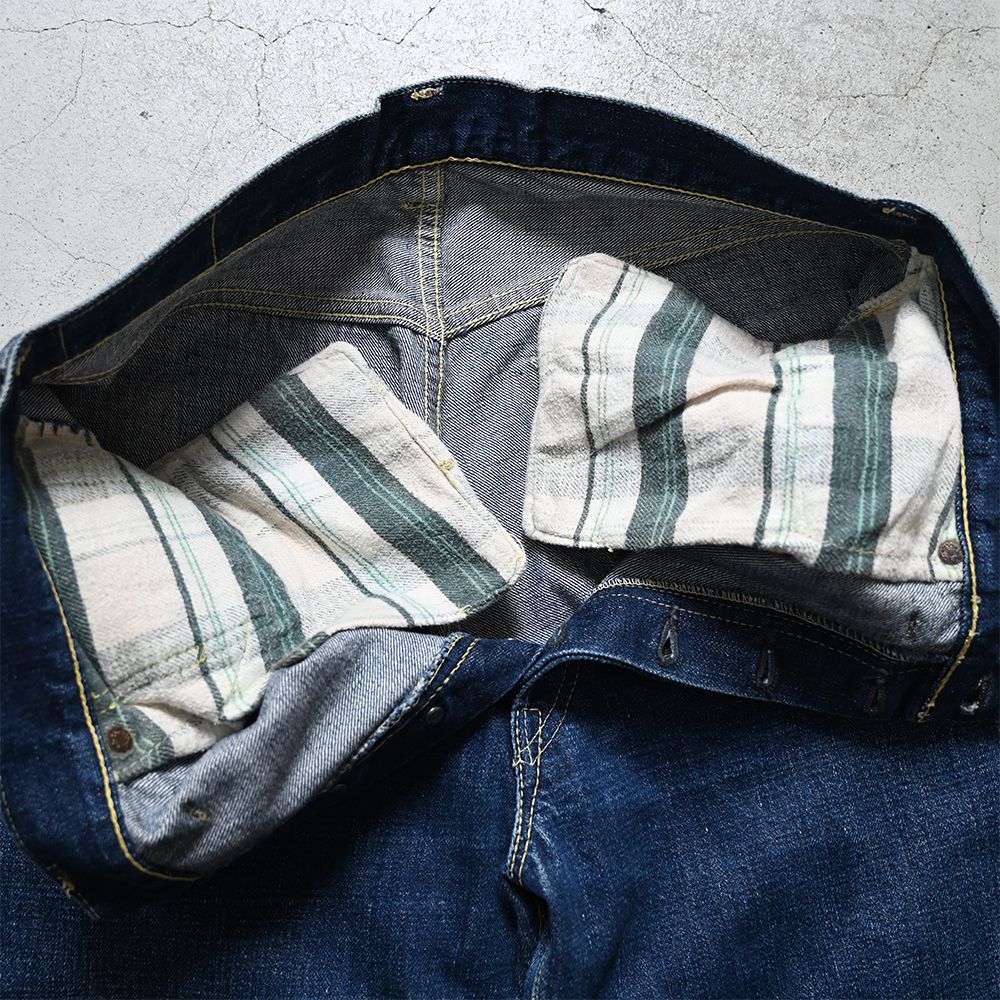 WWII Levi's S501XX Jeans (Credit: https://vintage-mushroom.net)
Many contemporary Japanese manufacturers draw inspiration from this particular chapter of denim history, including Warehouse & Co. with its Lot. S1003XX Pink Selvedge WWII Indigo Denim.

 |
 |
1947 – The turning point of modern denim
After the war, restrictions gradually disappeared and manufacturers reintroduced historical details (rivets, decorative stitching, full construction). The 1947 jeans are therefore seen as the first major “complete” postwar models, both heirs of prewar jeans and the starting point of the modern American jean. The year 1947 is now considered a definitive reference in the world of reproduction denim. Jeans from this era are characterized by :
- A more fitted cut than 1930s models
- The gradual disappearance of military details
- The return of iconic finishing details
- A more even and stable fabric
- The rise of jeans as civilian clothing
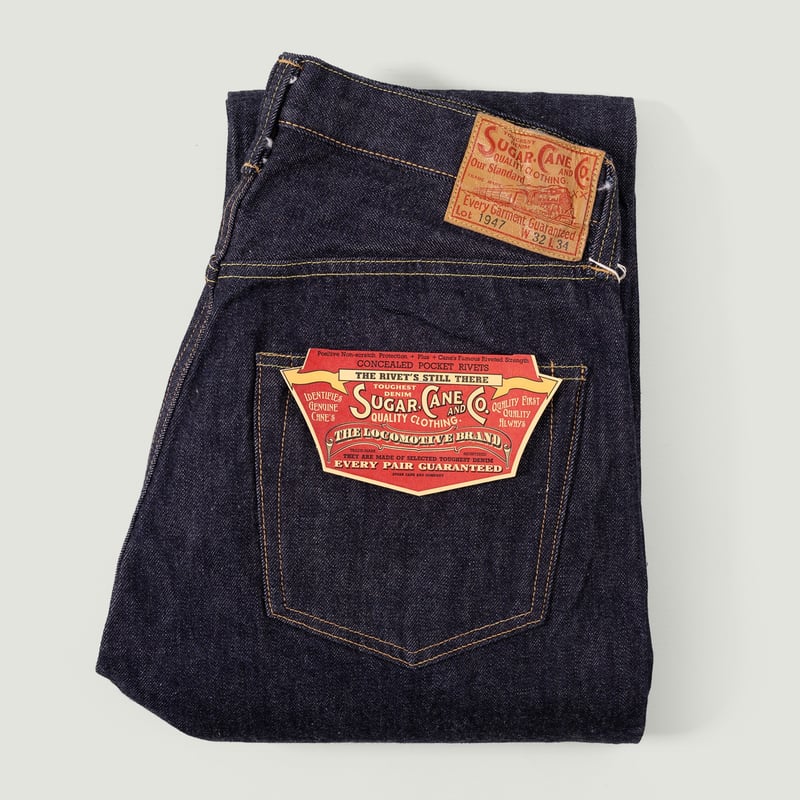
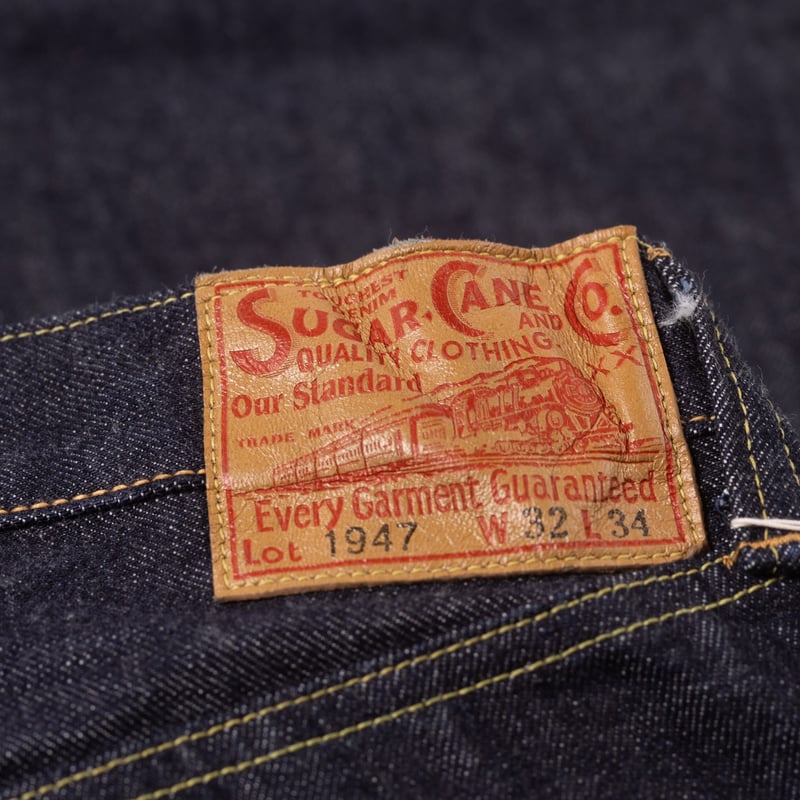
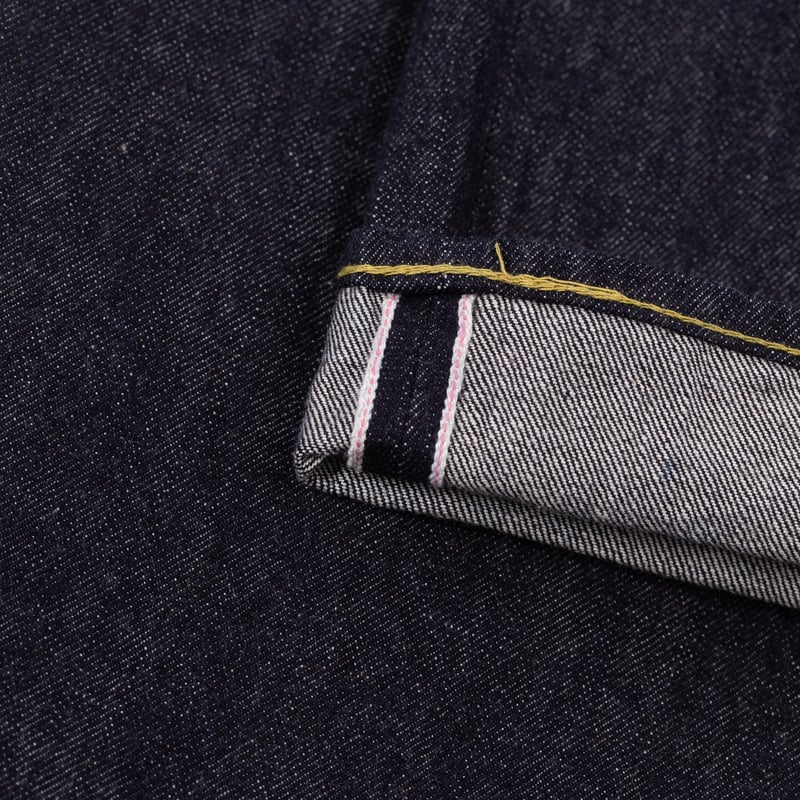
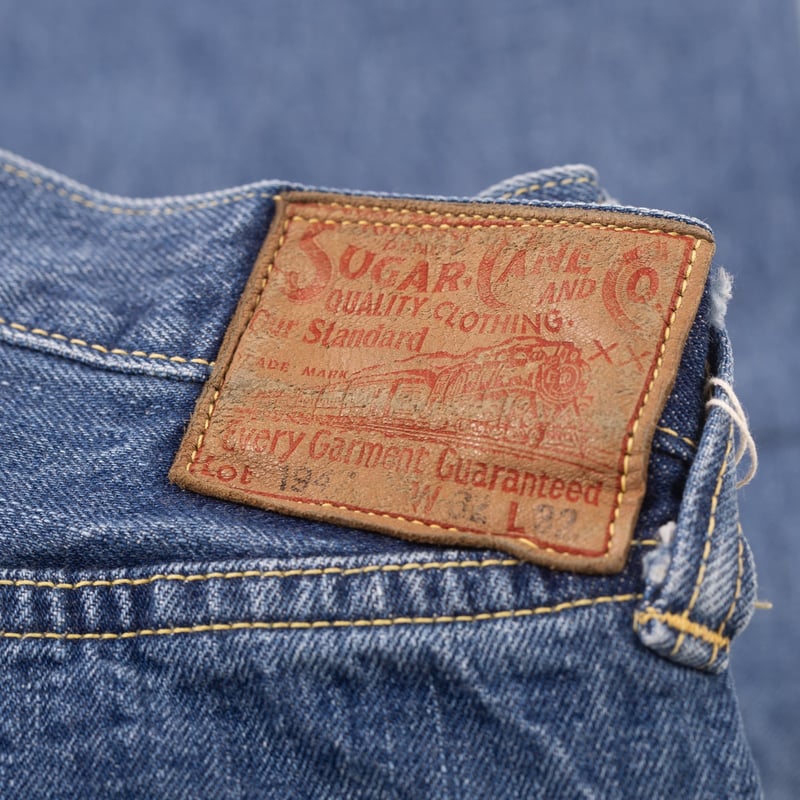
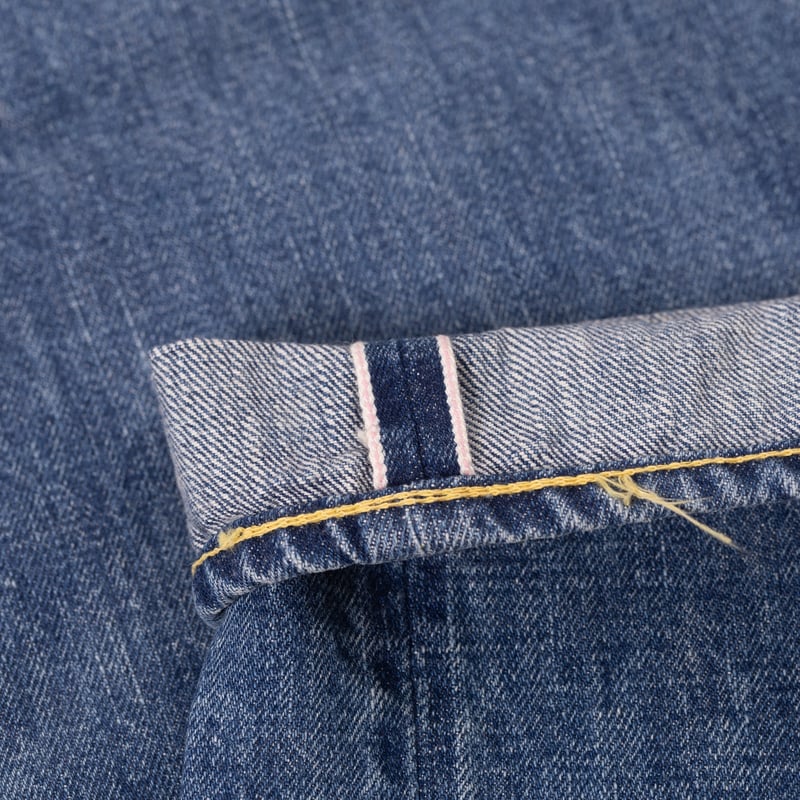
It is one of the most widely reproduced periods by contemporary Japanese brands, which strive to recreate the exact weaving and fading variations of that era. In this field, Sugar Cane stands out with its “1947” series, particularly praised for its denim developed from in-depth analyses of period-correct models. Whether in raw or “aged” versions, they are among the most convincing on the market.
 |
 |
Sugar Cane 14.25oz Denim 1947 Model Regular Straight
One Wash | Aged Wash
 |
 |
 |
 |
It is worth noting that “1947” has become a kind of shared language in Japanese denim: each brand attempts to recreate that precise moment when jeans regained their prewar details while also introducing the modern silhouette that would define the 1950s. This is why so many “1947” models exist today among the best Japanese houses—each one being as much a reinterpretation as a strict reproduction.
1953 – Jeans Enter Popular Culture
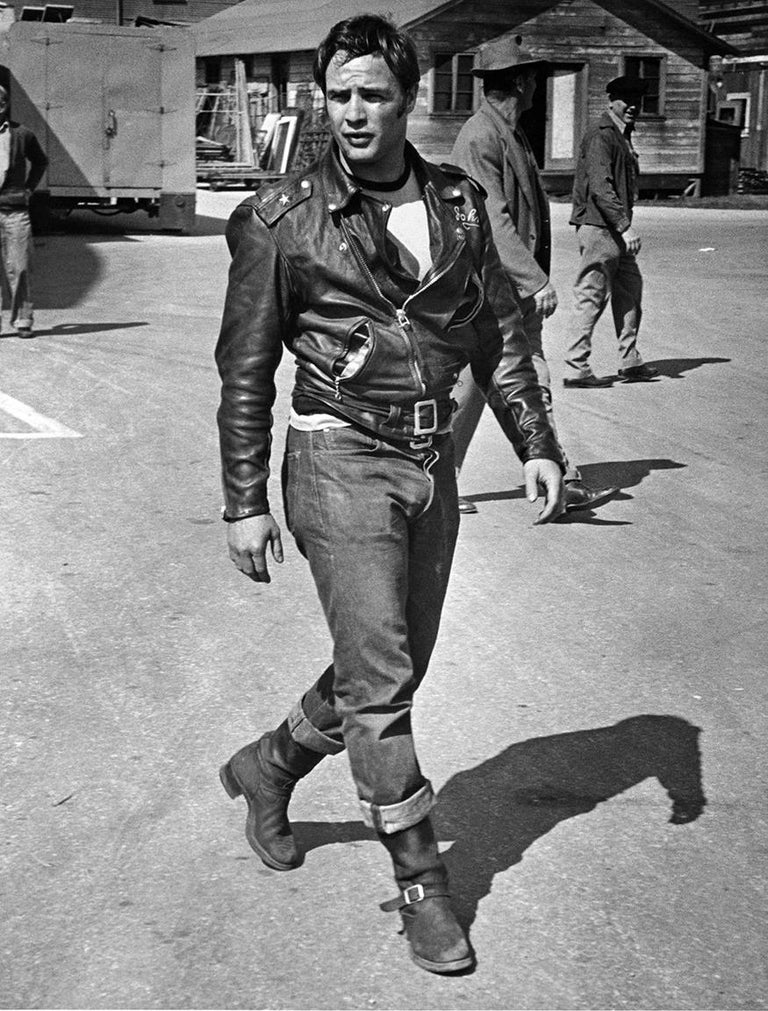
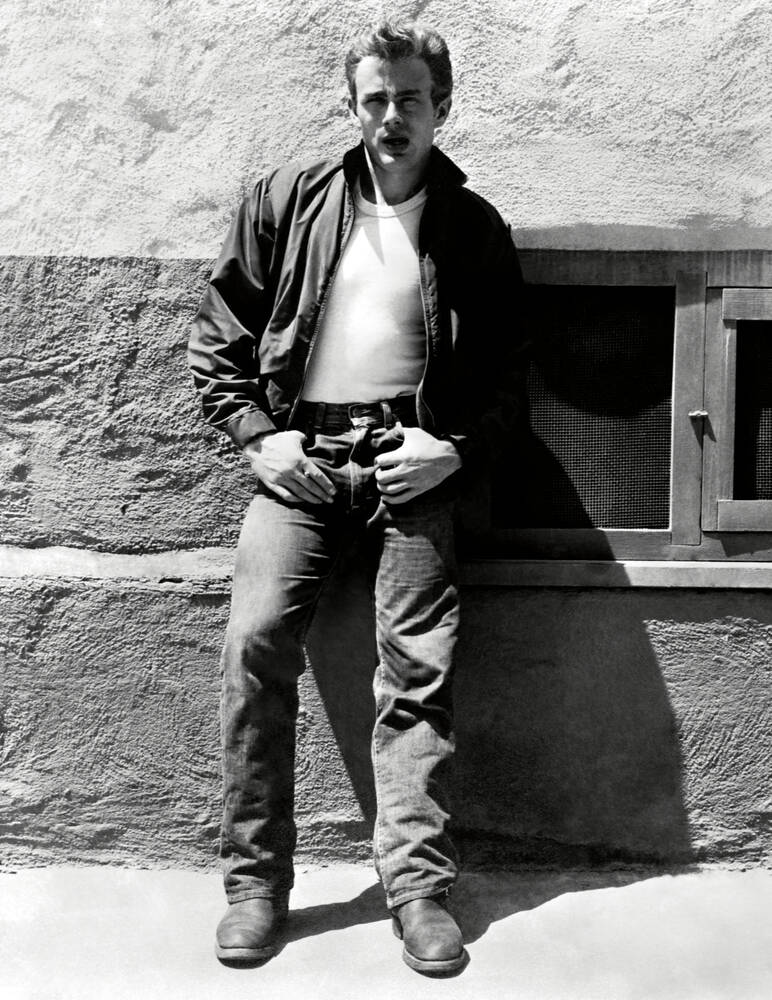
1953 marked the transition of jeans from workwear to a cultural icon. Thanks to the film The Wild One and the image of Marlon Brando (left), denim became a symbol of youth seeking freedom and rebellion against established norms. This evolution paved the way for the even greater phenomenon of 1955, when James Dean (right) wore jeans in Rebel Without a Cause, firmly establishing denim as the universal garment of youth.
 |
 |
As far as Japanese reproductions are concerned, this period offers a large number of models that have become icons in their own right. We have selected some of the most celebrated and sought-after references among selvedge denim enthusiasts, directly inspired by the late 1940s and early 1950s.
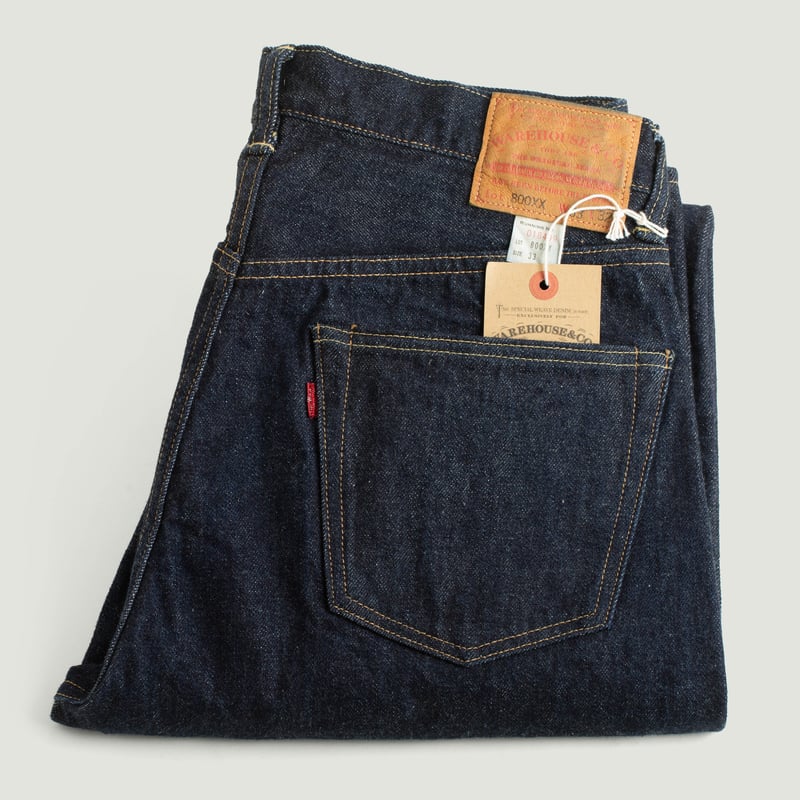
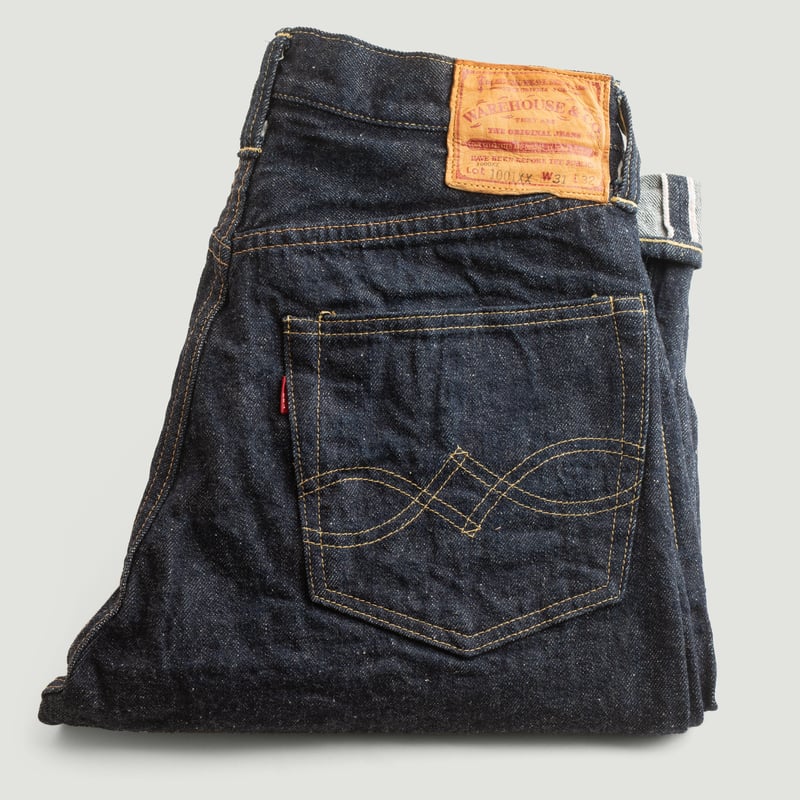
Warehouse & Co.
Many collectors consider Warehouse & Co. to be the ultimate benchmark when it comes to reproductions of these iconic years.
- 13.5oz denim developed from vintage jeans analyzed thread by thread
- Straight fit with a subtle taper
- Accurately reproduced rivets and hardware
- Extensive work on denim irregularities
Lot. 800XX | Lot. 1001XX
 |
 |
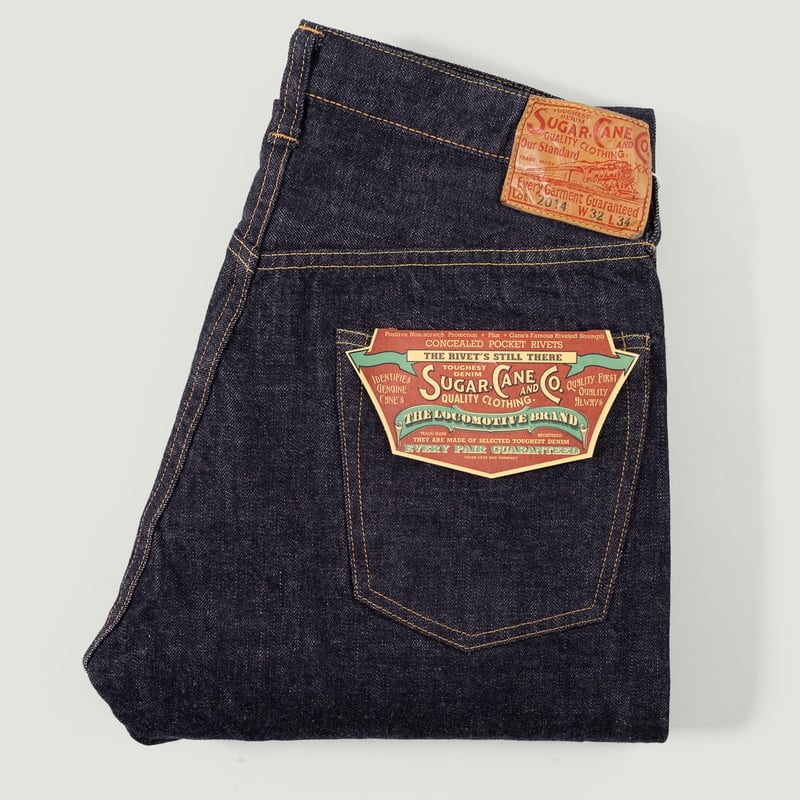
Sugar Cane
Although heavily inspired by 1947, some references offered by Sugar Cane perfectly embody the silhouette commonly found in the early 1950s. Their interpretation of these iconic models makes perfect sense when considering how much jean fits evolved as they were adopted by the youth of the era. One notable example is the SC42014, a slimmer version of the classic SC41947 Standard Denim, crafted here from a lighter and more contemporary 12oz fabric.
- 12oz denim developed by Sugar Cane
- More contemporary slightly tapered fit
- Highly authentic denim character
- Excellent fading potential
Denime
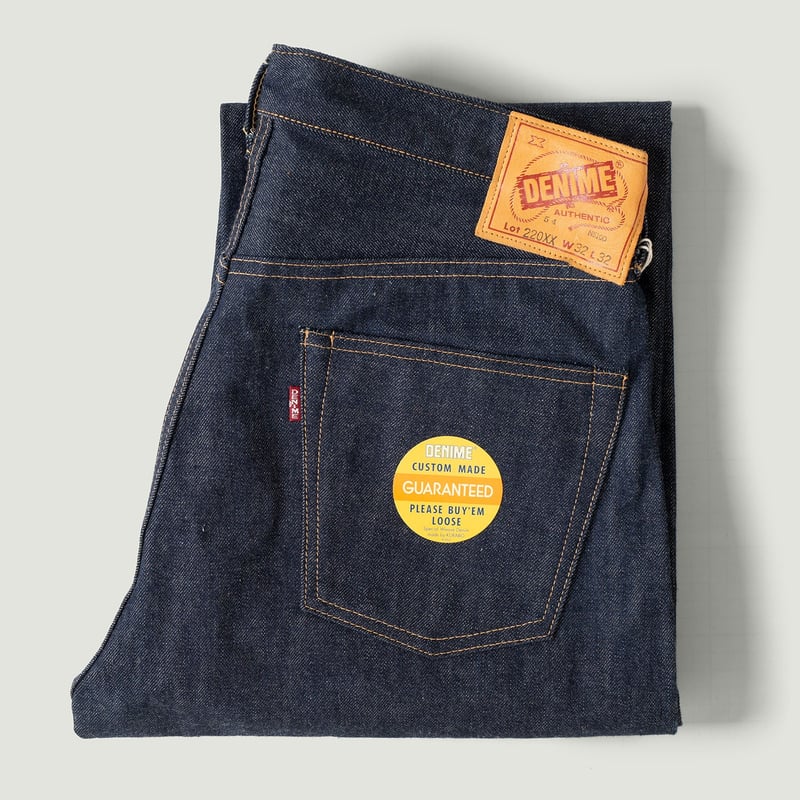
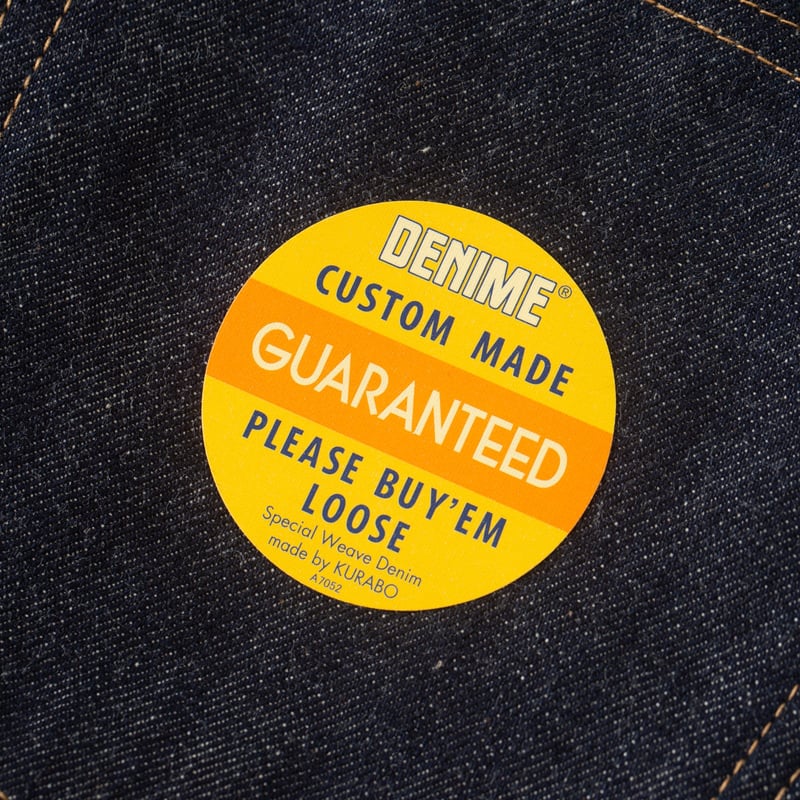
The Denime 220XX-54 is legitimate on several levels: it faithfully reproduces this emblematic period in American denim history while coming from one of the founding brands of the Japanese reproduction movement, a company that has played a major role in preserving this heritage since the late 1980s. It also perpetuates the authentic early-1950s denim experience through its faithful Shrink-to-Fit approach, echoing an era when jeans naturally personalized themselves through washing and wear.
 |
 |
1960/1970 – Denim as Personal Expression
While the 1950s symbolized the birth of jeans as a cultural icon, the 1960s and 1970s established denim as a truly universal garment. Jeans became a vehicle for individual expression, first as the uniform of the counterculture movement and later as a genuine fashion item. Wear, fading, and repairs became aesthetic features, fits diversified, and denim spread worldwide. This period also marked the arrival of jeans in women's wardrobes, contributing to their explosive popularity as an everyday garment worn by people from all walks of life.
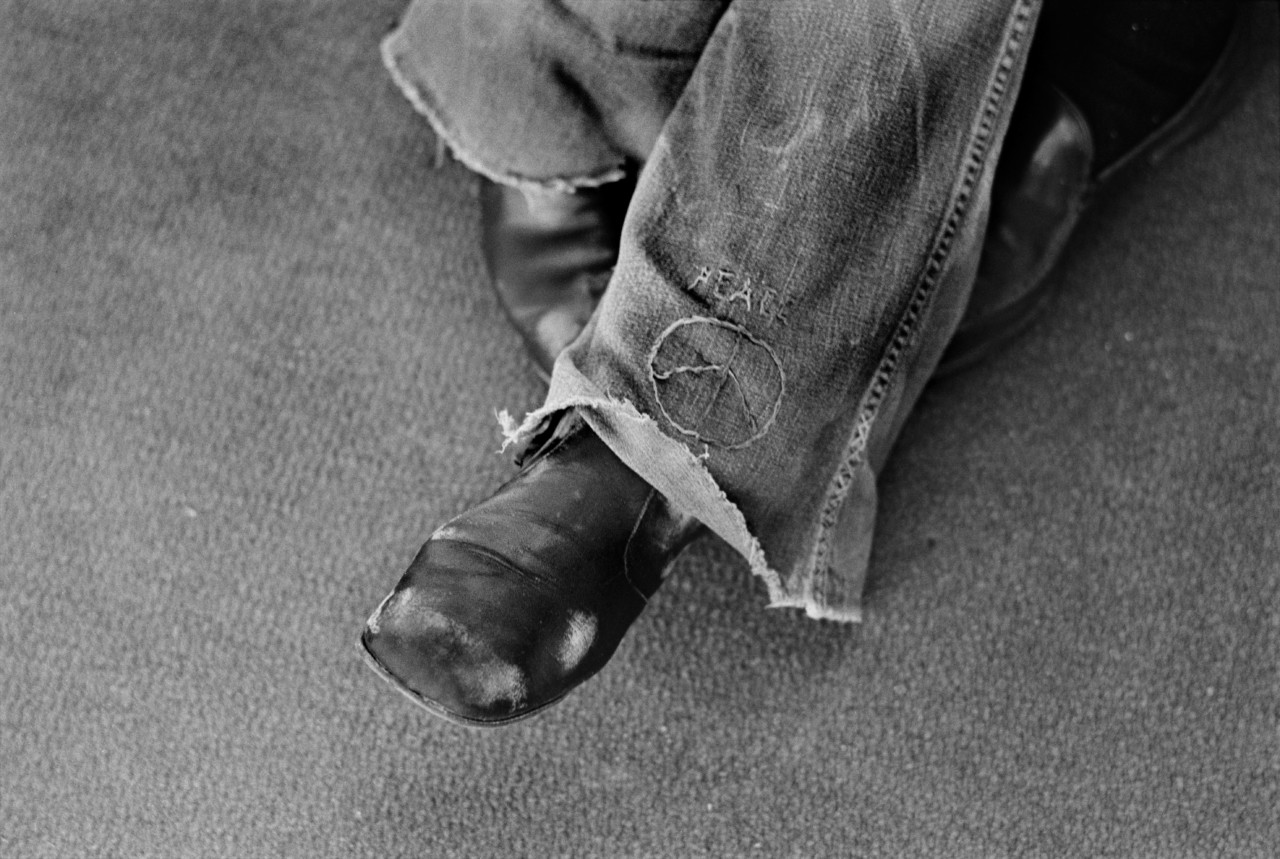
"Peace & Love" embroidery, New York, 1971 (credit: magnumphotos.com)
This period was also significant from a manufacturing perspective. Beginning in the 1960s, sanforized denim gradually became the industry standard. Jeans shrank less after washing and became easier to sell on a large scale. The era also witnessed the introduction of the famous "Big E" tab in the early 1960s, before its gradual disappearance around 1971, marking the transition between "classic" vintage denim and modern production methods.
The reproductions offered today by brands such as TCB, Denime, and FOB Factory allow enthusiasts to reconnect with this pivotal period when denim definitively broke away from the workwear world. They also demonstrate how brands can move beyond strict historical reproduction to create references that skillfully blend period-correct details with modern expectations.
TCB Jeans
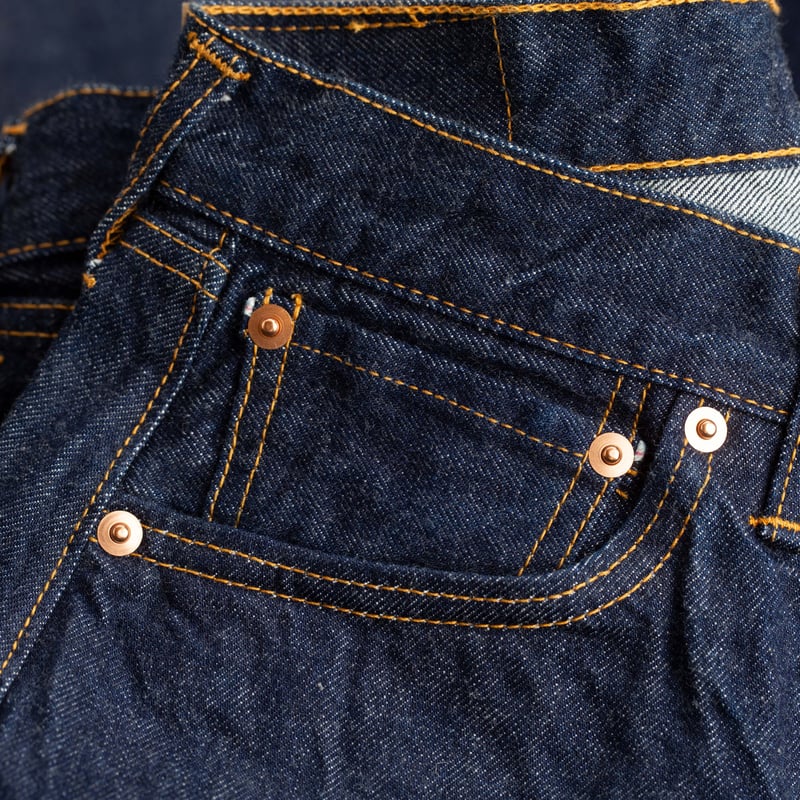
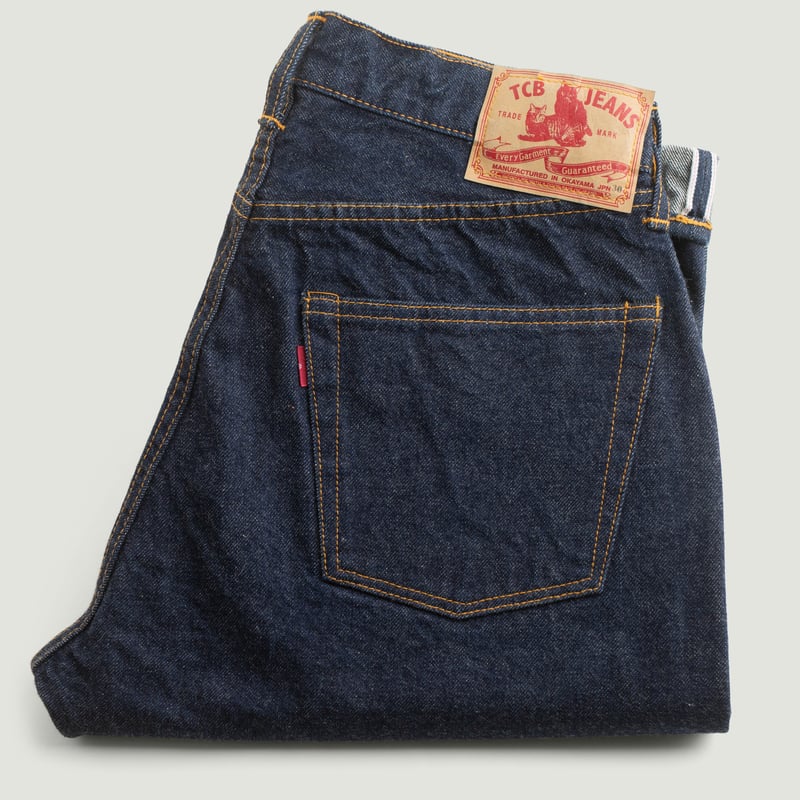
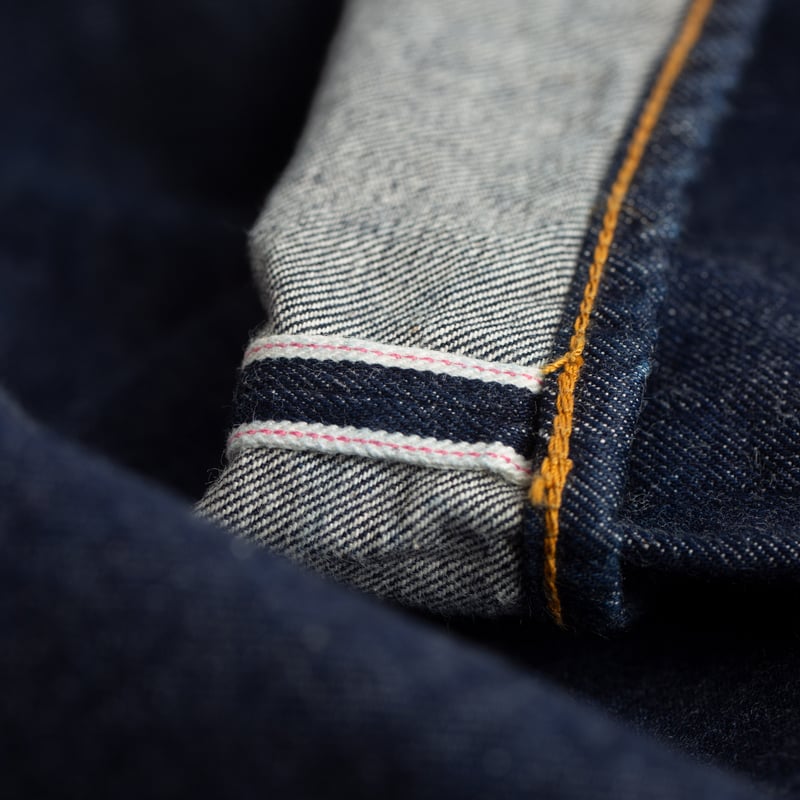
The 60's Jeans from TCB draws inspiration from the second half of the 1960s, featuring a balanced straight fit and characteristic details from the pre-Big E era. Its lighter shade is no coincidence: it reflects the gradual abandonment of the dark utilitarian garments once favored in industrial trades to conceal stains and grease.
 |
 |
 |
Denime
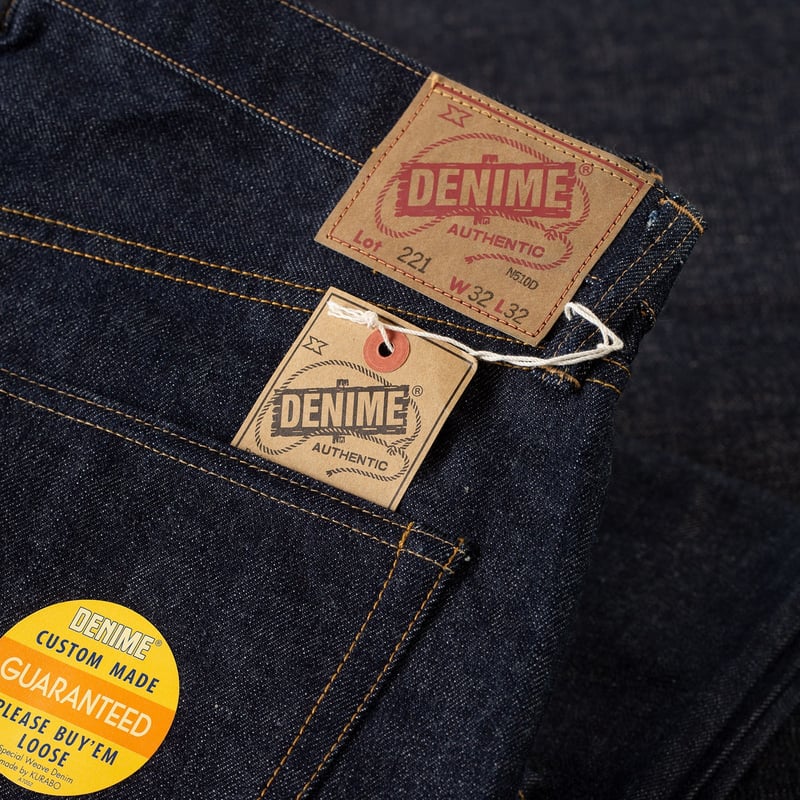
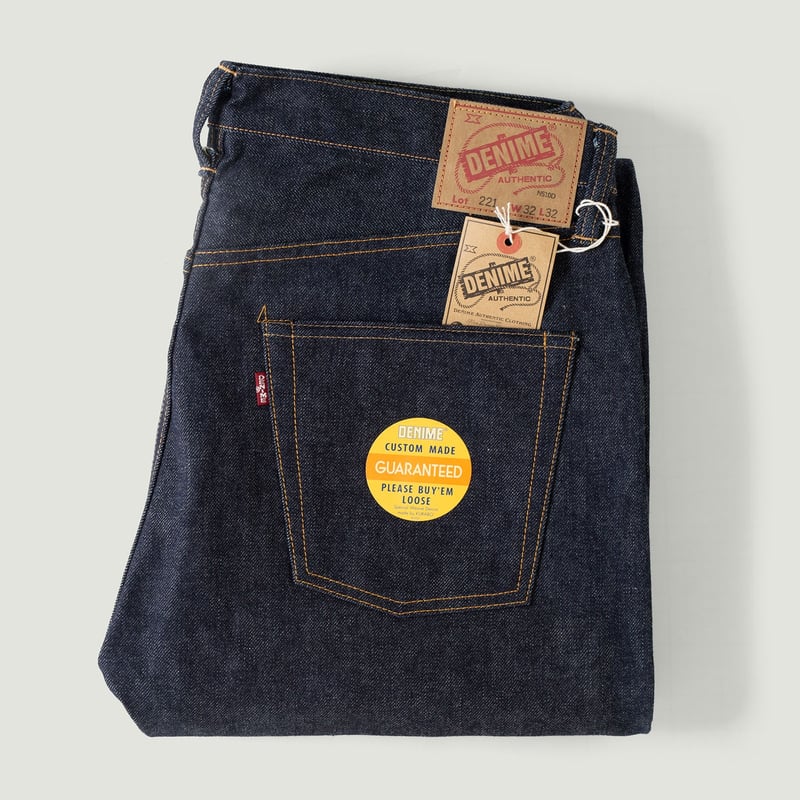
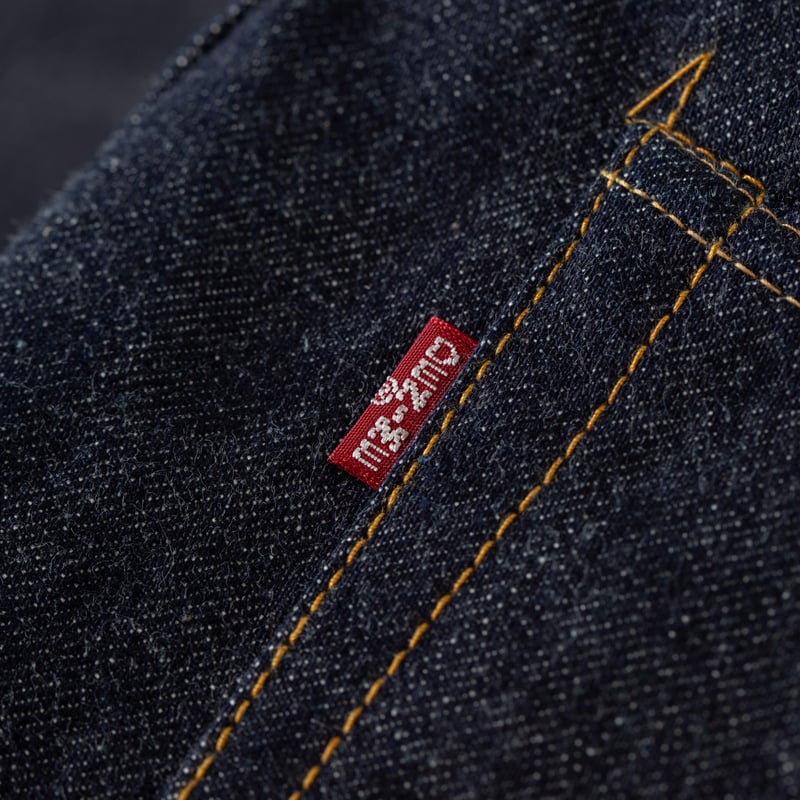
The Lot. 221 Big E Model showcases Denime's expertise and serves as a highly faithful reproduction of the early 1960s, a defining period marked by the introduction of the famous Big E tab. This model highlights a classic and comfortable silhouette, preserving the balance and proportions characteristic of vintage jeans from that era.
 |
 |
 |
FOB Factory
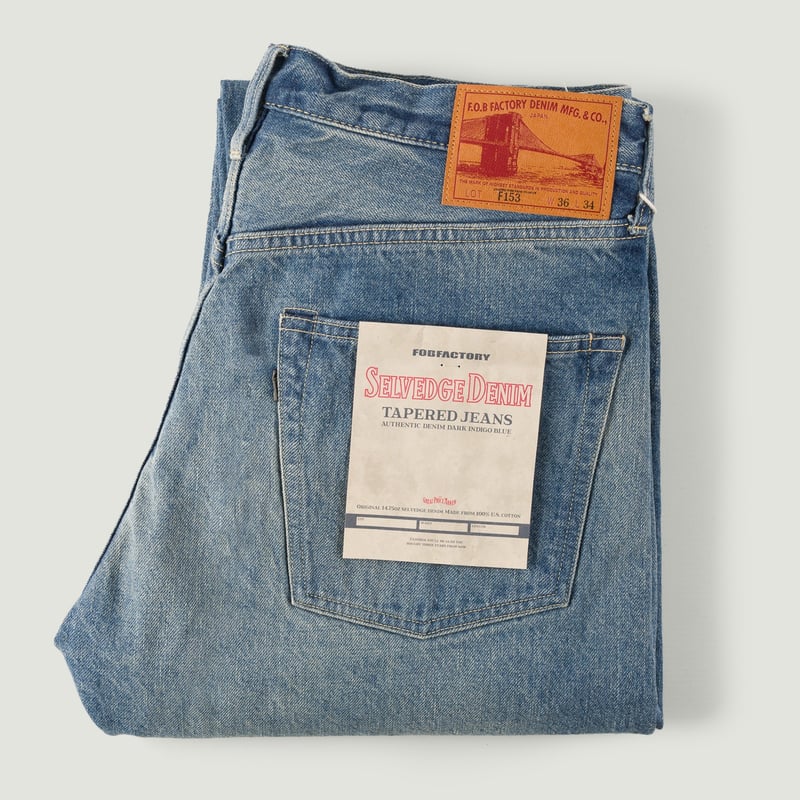
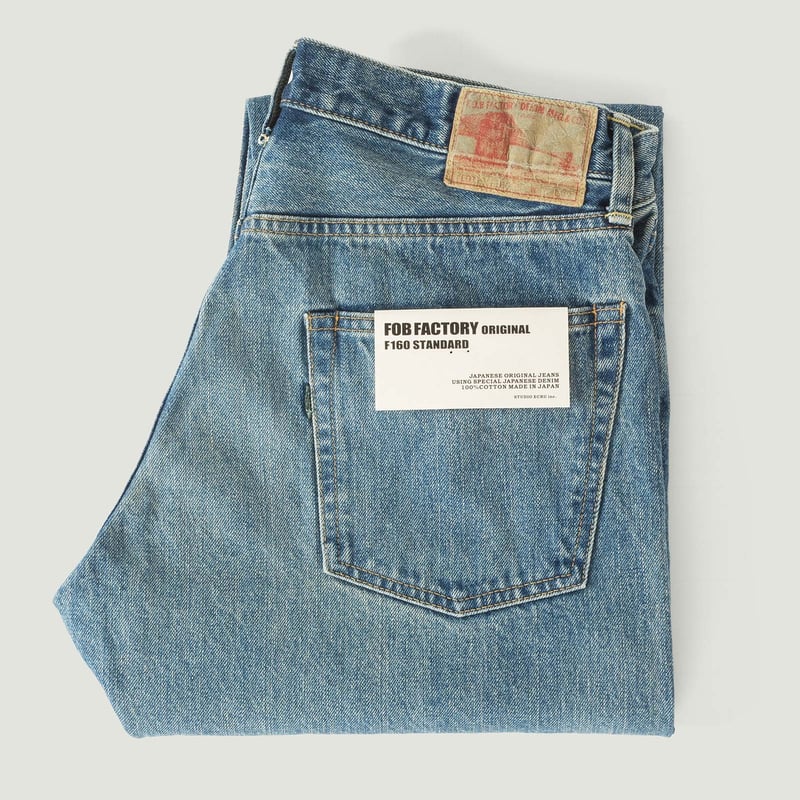
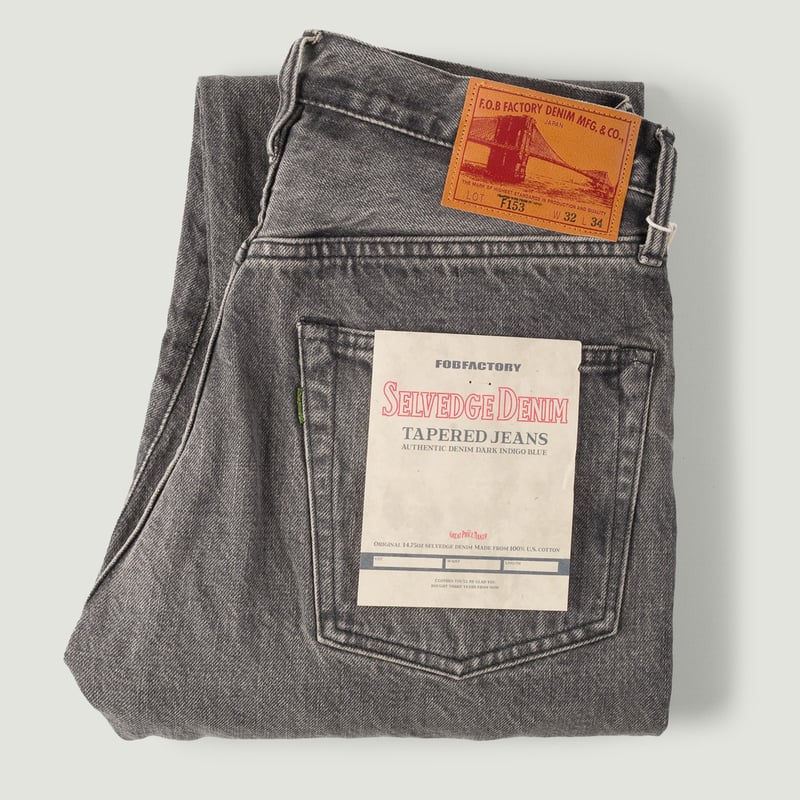
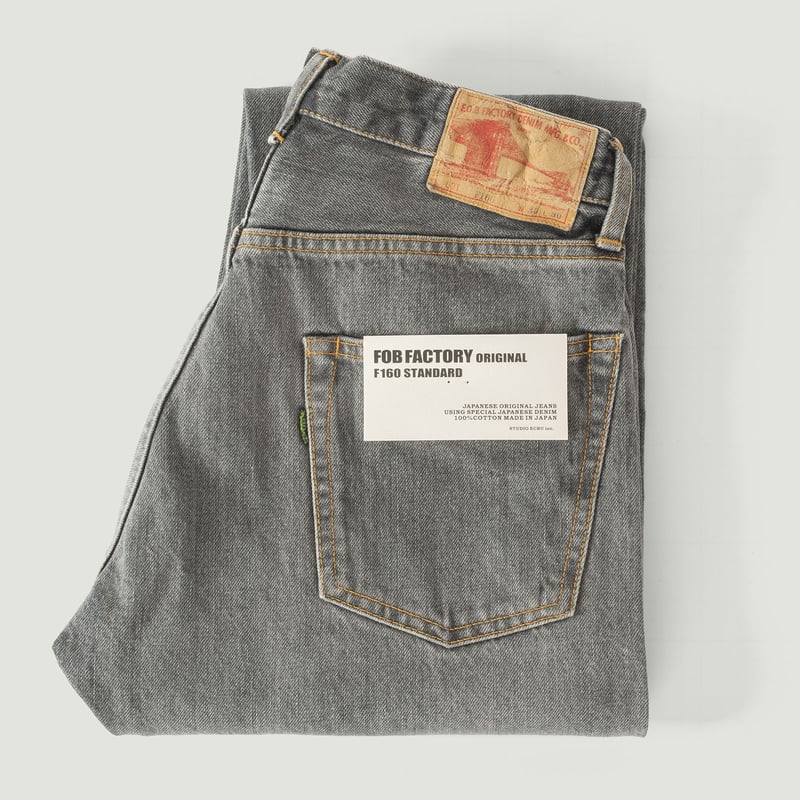
FOB Factory offers a more contemporary interpretation of this heritage through models such as the F153 and F160, which retain the proportions and aesthetics of American jeans from the 1960s and 1970s while adapting them to modern expectations in terms of comfort and fit. They perfectly illustrate how a pivotal period in denim history can be reimagined to meet contemporary standards while remaining faithful to its origins.
F153 5P | F160 '66
 |
 |
 |
 |
The 10 Most Influential Jeans in Denim History
Since the invention of jeans in the late 19th century, certain models have left a lasting mark on denim history through their innovations, widespread adoption, or influence on future generations. Some websites document a vast number of historical models, such as Denim Archives, which offers an extensive and highly detailed directory.
Among all these references, a non-exhaustive list of ten essential models can be identified—jeans that helped shape the garment as we know it today.
- Levi's 501 XX (1947) – Widely regarded as the benchmark vintage American jean, defining the standards of modern denim.
- Lee 101 – A cornerstone of American workwear history, renowned for its durability and comfort.
- Wrangler 11MWZ (1947) – Developed for cowboys and rodeo riders, introducing several functional innovations still used today.
- Levi's 501 Big E (1966) – The last major evolution of the 501 before the industrial changes of the 1970s; a grail for collectors.
- Levi's 505 – The first Levi's jean equipped with a zipper fly, symbolizing denim's modernization during the 1960s.
- Levi's 517 – Its bootcut silhouette made it one of the defining jeans of the 1970s.
- Lee Riders – An essential reference from the golden age of American denim, particularly appreciated within western culture.
- Denime XX – One of the first major Japanese jeans inspired by vintage Levi's, contributing to the revival of traditional denim in the 1980s.
- Warehouse 1001XX – Renowned for its faithfulness to historical American models and its archival approach to denim reproduction.
- TCB 50's Jeans – A modern reproduction of 1950s jeans that has become a benchmark among selvedge denim enthusiasts.
From the first riveted jeans of 1873 to contemporary Japanese reproductions, denim history reflects a constant pursuit of improvement, authenticity, and craftsmanship. While fits, fabrics, and details have evolved over the decades, the most iconic models continue to inspire both major brands and specialist heritage denim manufacturers.
Japan: The Living Preservation of Denim Archives
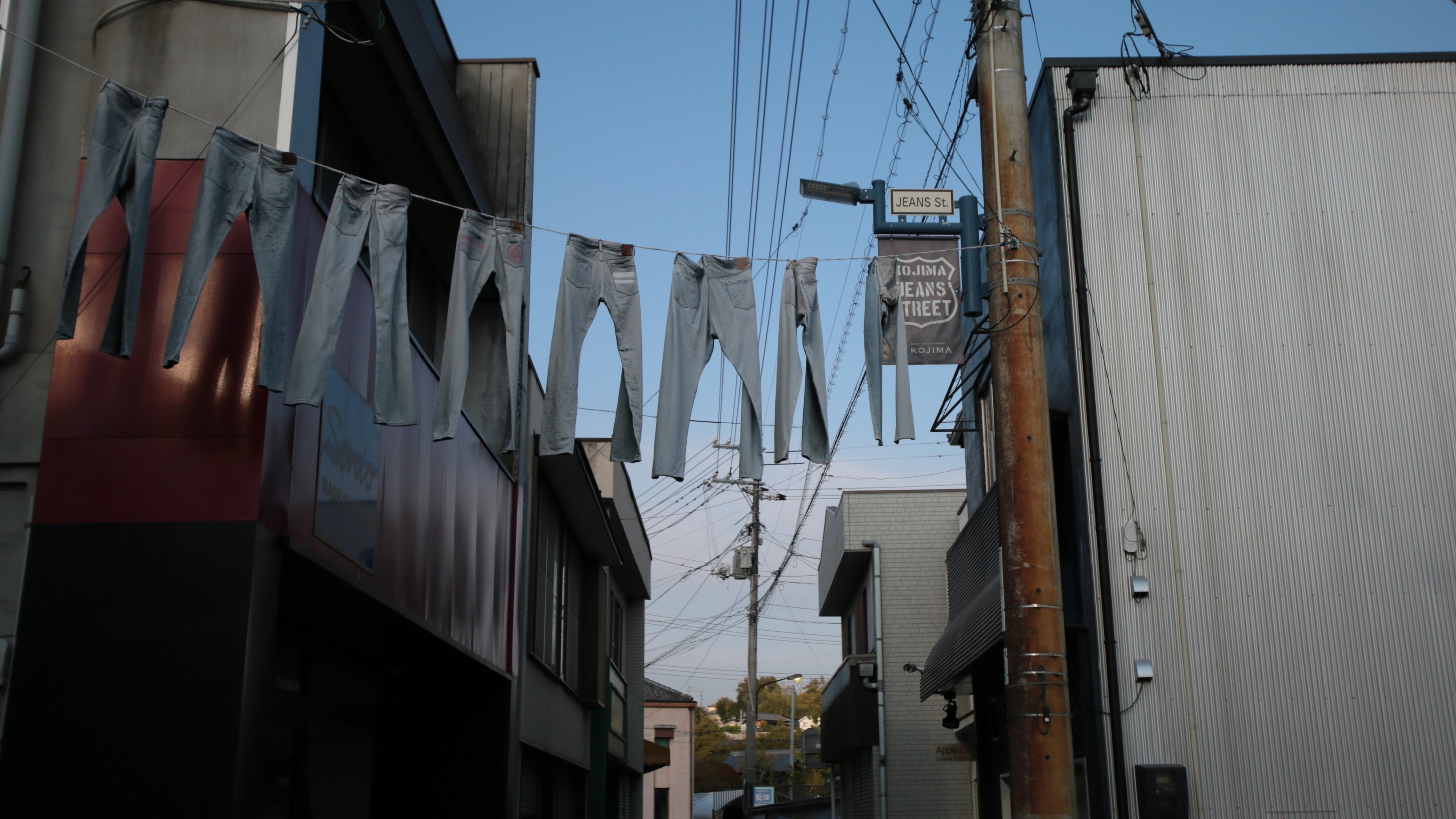
Kojima Jeans Street, Okayama Prefecture
Since the 1990s, Japan has established itself as the global center of historical denim reproduction. Japanese brands do not simply reinterpret denim — they document its historical variations.
Companies such as Denime, Warehouse & Co., Sugar Cane, TCB Jeans, and FOB Factory analyze original vintage garments in order to reproduce:
- Selvedge fabrics woven on vintage shuttle looms
- Period-correct yarn irregularities
- Deep, unstable indigo dyes
- Authentic workwear construction methods
Other major labels have also become key players in the field, including Momotaro Jeans, Studio D'Artisan, Samurai Jeans, and ONI Denim. These respected brands have developed strong identities while maintaining a deep respect for traditional foundations, continually pushing the boundaries of fabric development, texture, and dyeing techniques.
More recent brands, such as Omoto Denim and XX Development, continue to preserve these skills and this heritage through more contemporary visions, making Japanese denim accessible to younger generations increasingly interested in quality over quantity.
This philosophy, now shared worldwide, is the result of decades of overproduction surrounding the world's most widely sold garment and a growing desire to remember that truly great things require time, patience, and humility—much like denim itself, which has endured through every era without ever losing its relevance.
Discover our complete jeans collection, available both in-store and online.
VIEW THE COLLECTION