
Botanical dyes: craftsmanship, heritage and modernity

The botanical dyes, also known as natural dyes, refer to textile dyeing processes made from pigments extracted from plants, roots, bark, leaves or other organic materials, without the use of synthetic dyes.
Compared to industrial processes, these traditional techniques have a lower environmental footprint and rely on ancient knowledge. They also produce unique results, where each shade and material comes with its own variations.
In Indian textiles, these methods are part of a long-standing tradition. Each colour reflects the connection between the fibre, the artisan’s gesture and the history of the garment.
Kardo — Indian textile craftsmanship reinterpreted
Kardo, founded in 2013 in New Delhi, follows a slow fashion approach opposed to industrial production. The brand draws on Indian textile heritage: hand weaving, traditional indigo, block printing ("Block Print"), Ikat, Shibori and artisanal embroidery.
The brand works directly with weaving communities across India to preserve these skills and reduce its environmental impact.
Each piece is often made using the “ONExONE” process, where a single artisan handles cutting, assembly and finishing. This production method ensures full human traceability and a direct connection with the garment.
Kardo reminds us that what matters is not only where a garment is made, but who makes it and under what conditions.
The natural chemistry of plant-based dyeing
Botanical dyes rely on natural sources:
- Barks and roots (such as madder for reds)
- Dye plants (such as indigo for blues)
- Spices and fruits (turmeric, pomegranate, etc.)
Textile fibres are often prepared with a mordant (alum or tannins) to fix the colour. The dyeing process is then carried out through repeated baths until the desired shade is achieved.
This process produces lively, slightly irregular and nuanced results, which are highly valued in handcrafted pieces.
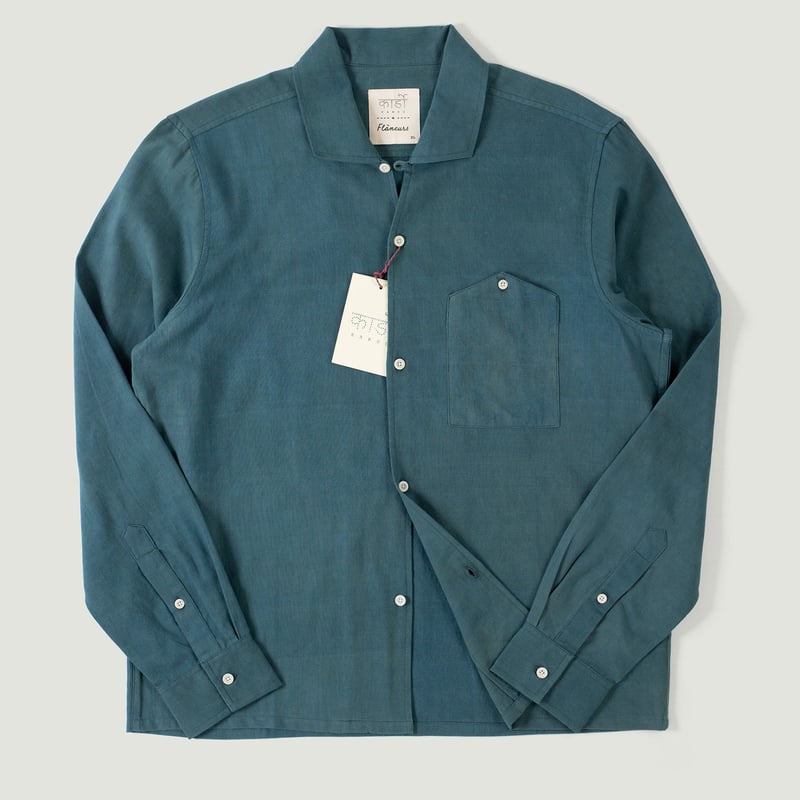
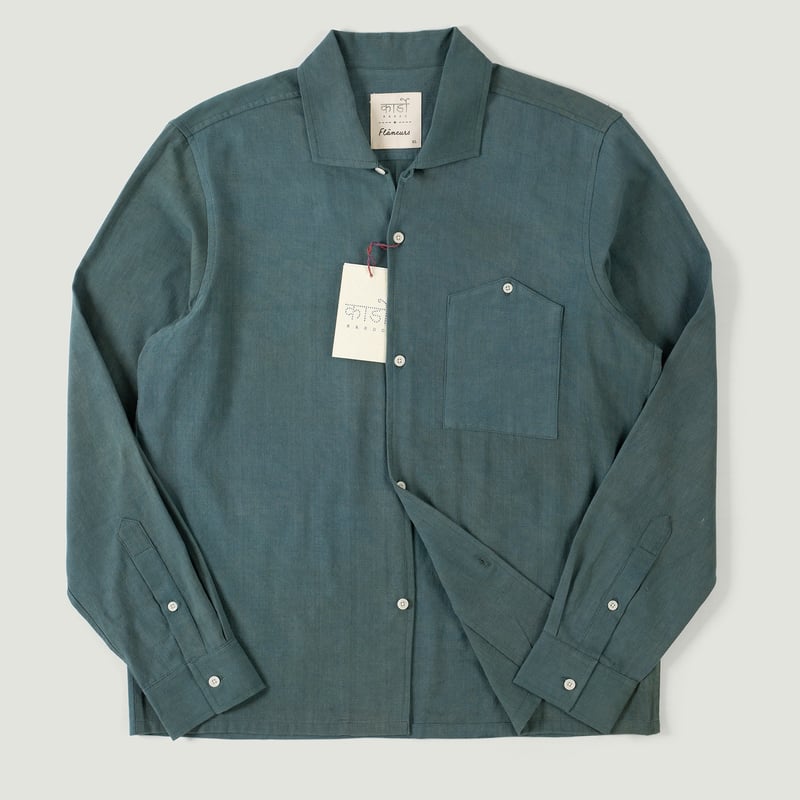
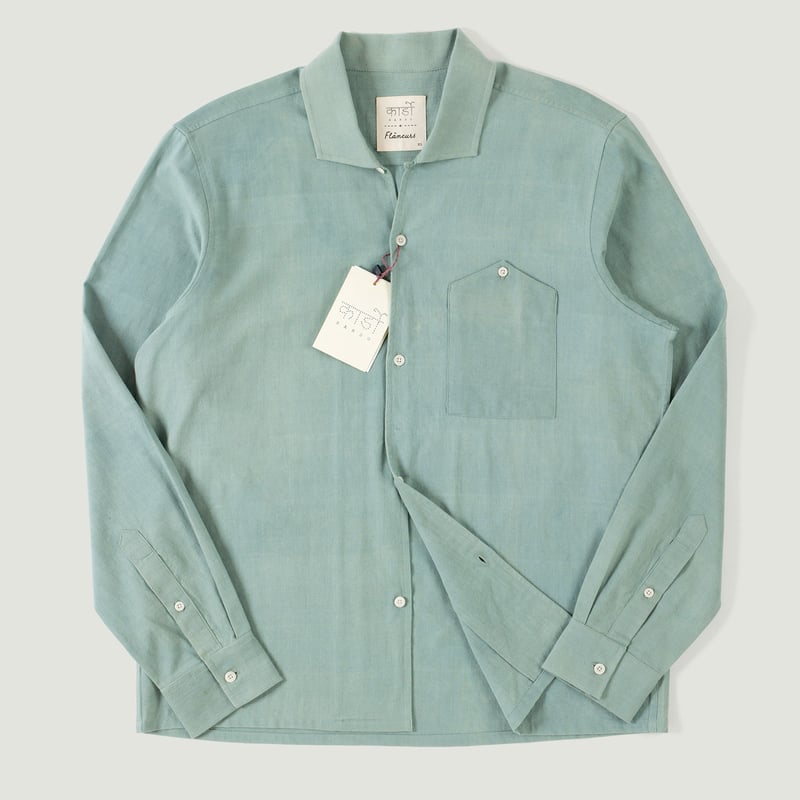
Handwoven Denim Shirt Kardo x Flâneurs
As part of our Kardo x Flâneurs collaboration, we designed a handwoven denim shirt, highlighting raw materiality and traditional techniques.

Key features:
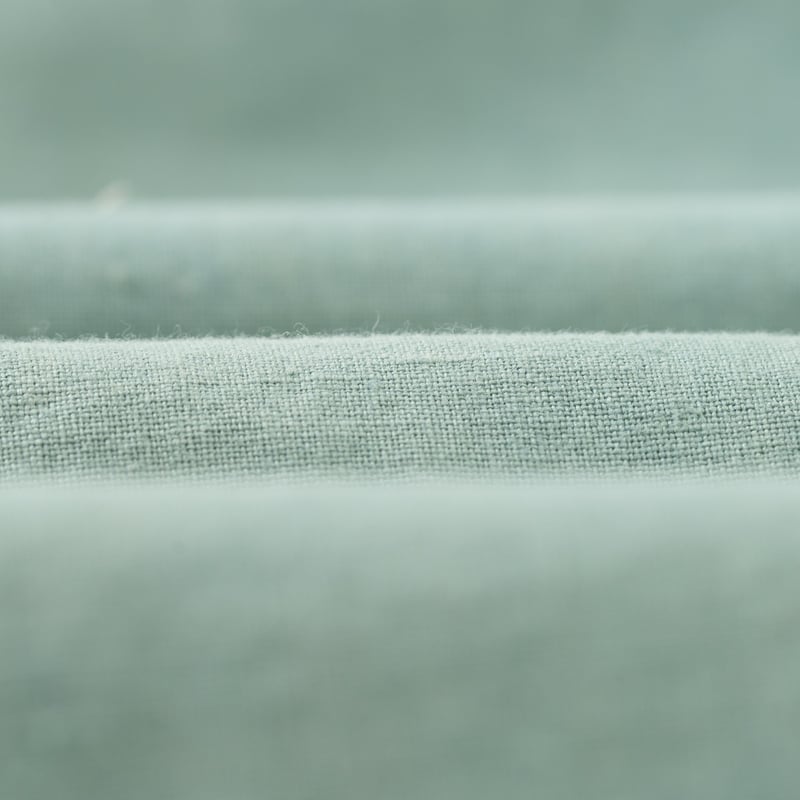
- 100% handwoven cotton — a deliberately irregular texture, signature of artisanal craftsmanship.
- Natural dye (traditional indigo or similar botanical dyes), with variations depending on dye baths and immersion time.
Three colour variations:
Light Indigo – Light shade
- More diluted baths or shorter immersion time.
- Result: a soft, almost pastel shade that highlights the weave.
Mid Indigo – Medium shade

- Intermediate intensity, close to classic indigo.
- Result: a balanced shade, neither too light nor too saturated.
Indigo – Dark shade

- Repeated dye baths for deeper saturation.
- Result: a rich, deep colour that will develop a patina over time.
An ethical and sustainable approach
Kardo’s approach is based on a few simple principles:
- Preserving craftsmanship passed down through generations.
- Supporting human-scale production, away from mass industry.
- Reducing environmental impact through natural dyes and low-impact processes.
- Valuing artisans, who are often identified and credited for each piece.
This Kardo x Flâneurs collaboration around handwoven, naturally dyed garments goes beyond clothing. It highlights a meeting between traditional craftsmanship and contemporary design, while promoting a slower, more conscious fashion that respects those who make it.