

The ONI Denim 274 “Awa Shōai”, now completely sold out, remains one of the most striking examples of the use of natural indigo in Japanese denim.
Through this rare piece, we invite you to explore a central topic in the selvedge world: indigo dyeing applied to Japanese jeans.
The subject is broad, technical, and often treated in a simplified way. Yet it is essential to understand why certain fabrics develop exceptional fades, and why some models reach such high price levels.

Indigo: much more than just a color
Among the countless plants used to dye textiles, one holds a special place: indigo, valued for its depth, visual richness, and unique ability to evolve over time.
Many countries have developed their own techniques around this dye: Japan (shibori, kase-zome), India (ikat, bandhani), Indonesia (batik), and several regions of West Africa.
In this article, we will focus on Japan, and more specifically on the dyeing techniques used in the production of Japanese selvedge jeans.
A topic explored with Oishi-san, founder of ONI Denim
To go deeper into this subject, we spoke with Oishi-san, founder of the iconic brand ONI Denim.
Few people have such extensive experience in denim. His explanations help clarify the differences between industrial dyeing, rope dyeing, and traditional artisanal methods.
The main indigo regions in Japan
Japan has several regions historically linked to indigo dyeing:
- Saitama, with Bushū aizome
- Chiba, which also has an indigo tradition
- Hiroshima, birthplace of the remarkable Bingo kasuri
- Tokushima, on Shikoku Island, famous for Awa Shōai
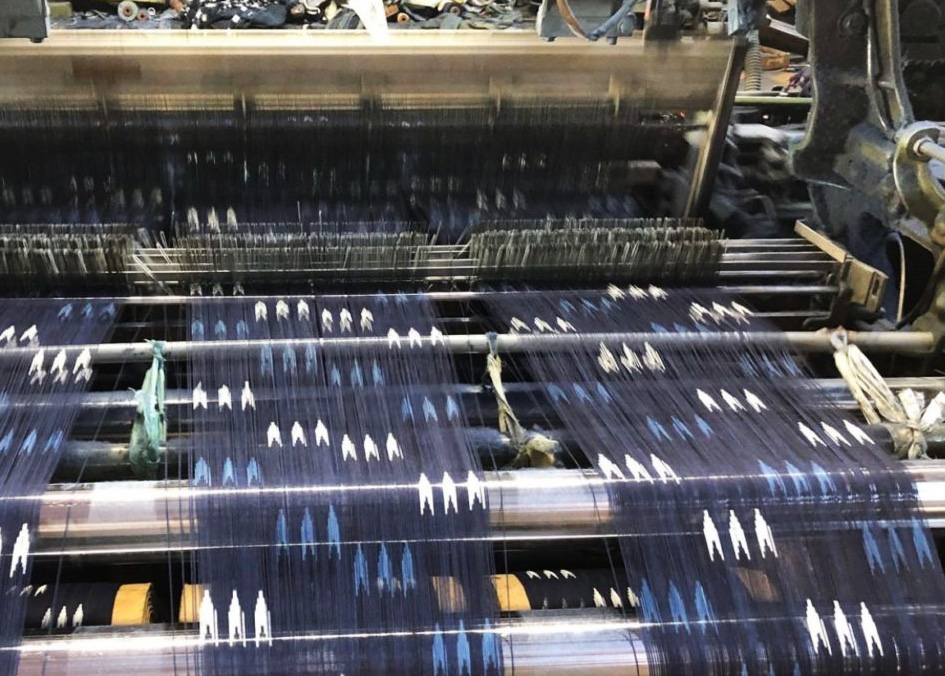
Why dyeing is decisive in selvedge denim
When talking about denim, it is important to remember that dyeing usually happens before weaving.
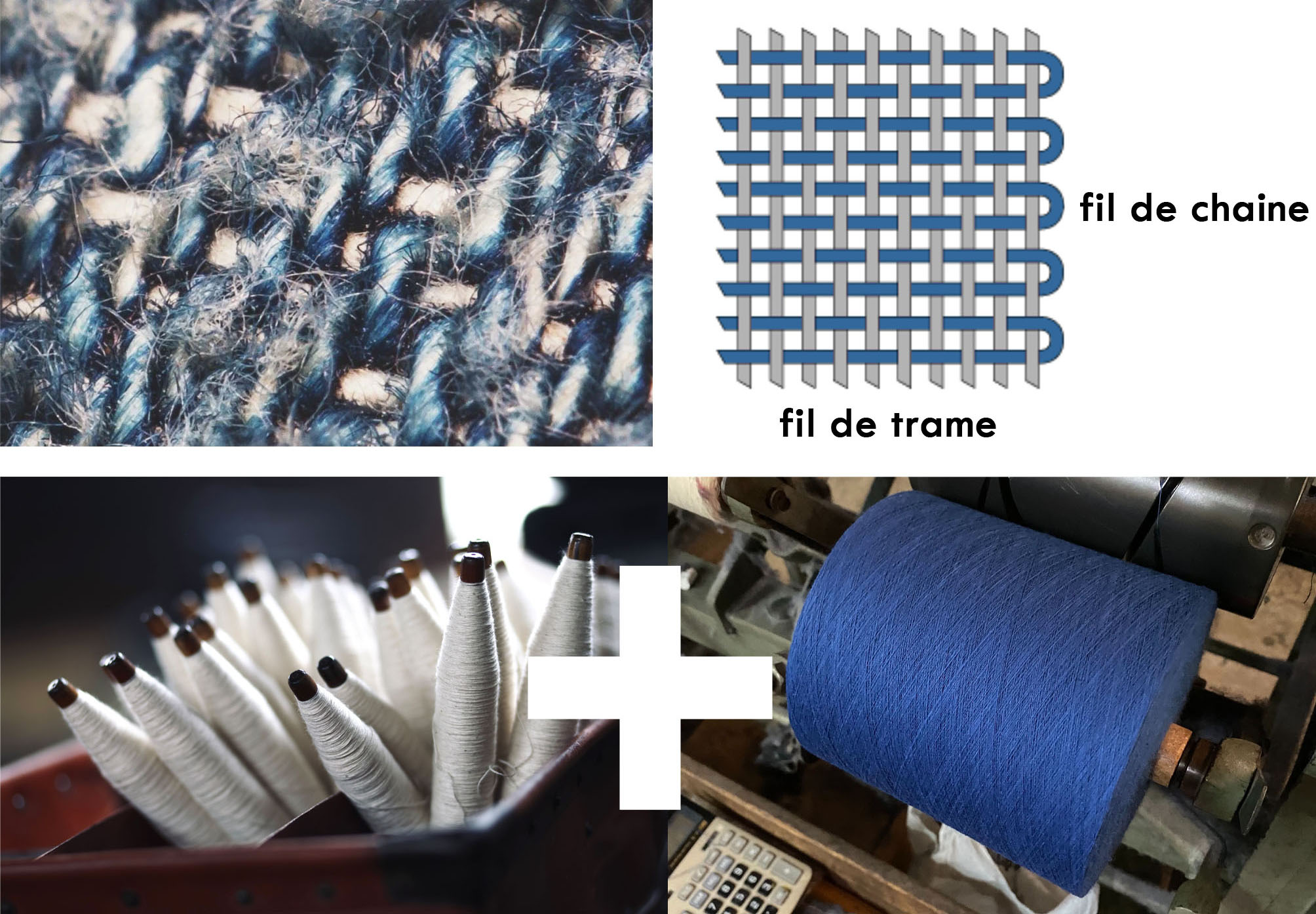
The fabric is built from two yarns:
- The warp yarn, usually dyed with indigo and visible on the outer face
- The weft yarn, often left natural and visible on the reverse side
The way the warp yarn is dyed directly influences:
- the depth of the blue
- the future fading of the jeans
- the contrast of wear patterns
- the value of the final fabric
Sheet dyeing: the industrial method
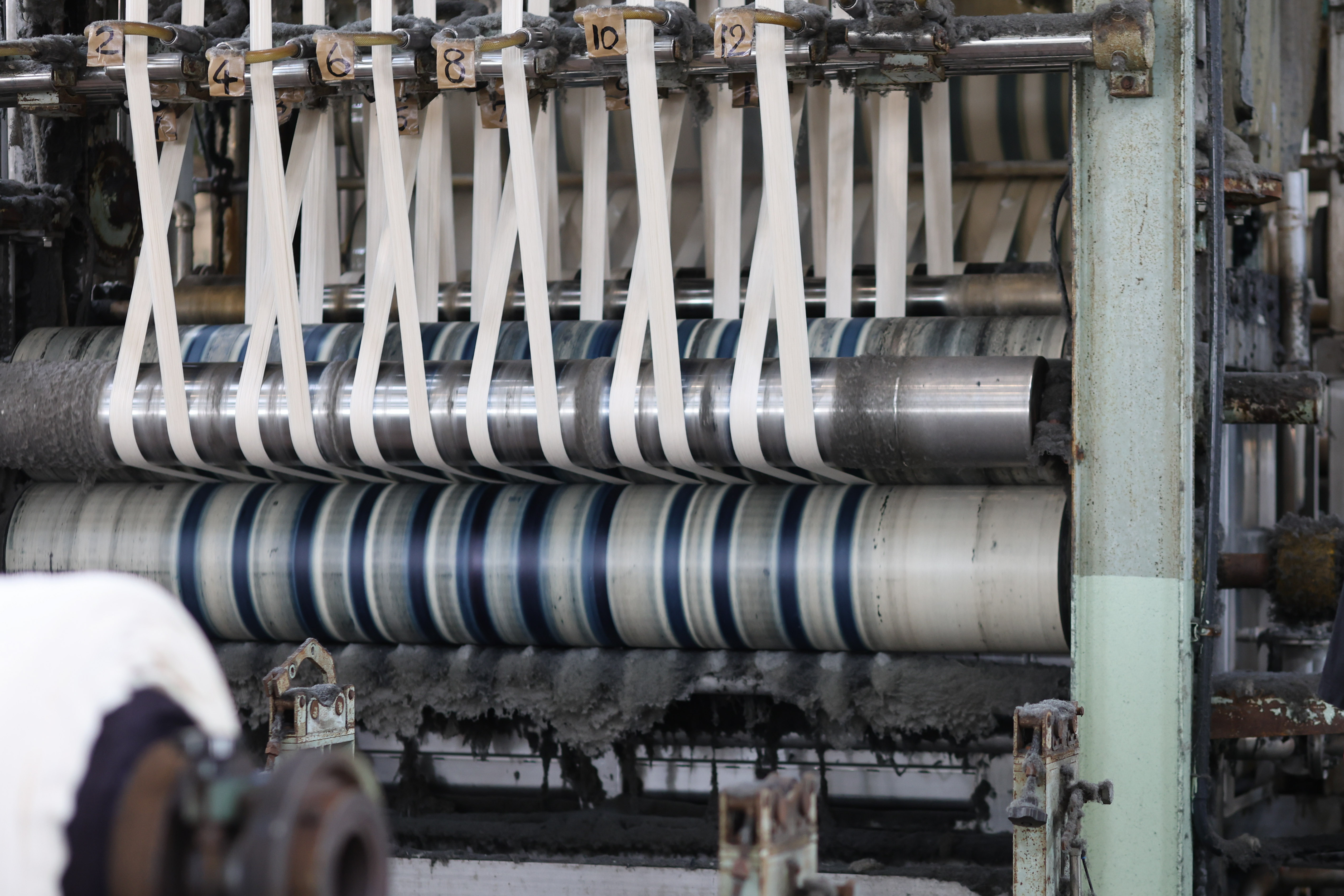
In mass production, sheet dyeing is commonly used.
Yarns are aligned in sheets and then passed repeatedly through indigo baths. This method enables high volume production and lower costs.
In return, the dye penetrates the yarn more evenly, often producing more uniform and less contrasted fades.
Kuroki Mills: pioneer of Japanese rope dyeing
For Japanese selvedge denim, the reference method remains rope dyeing.
Yarns are bundled into ropes before being dyed. They pass through multiple dye baths, with air oxidation between each immersion.
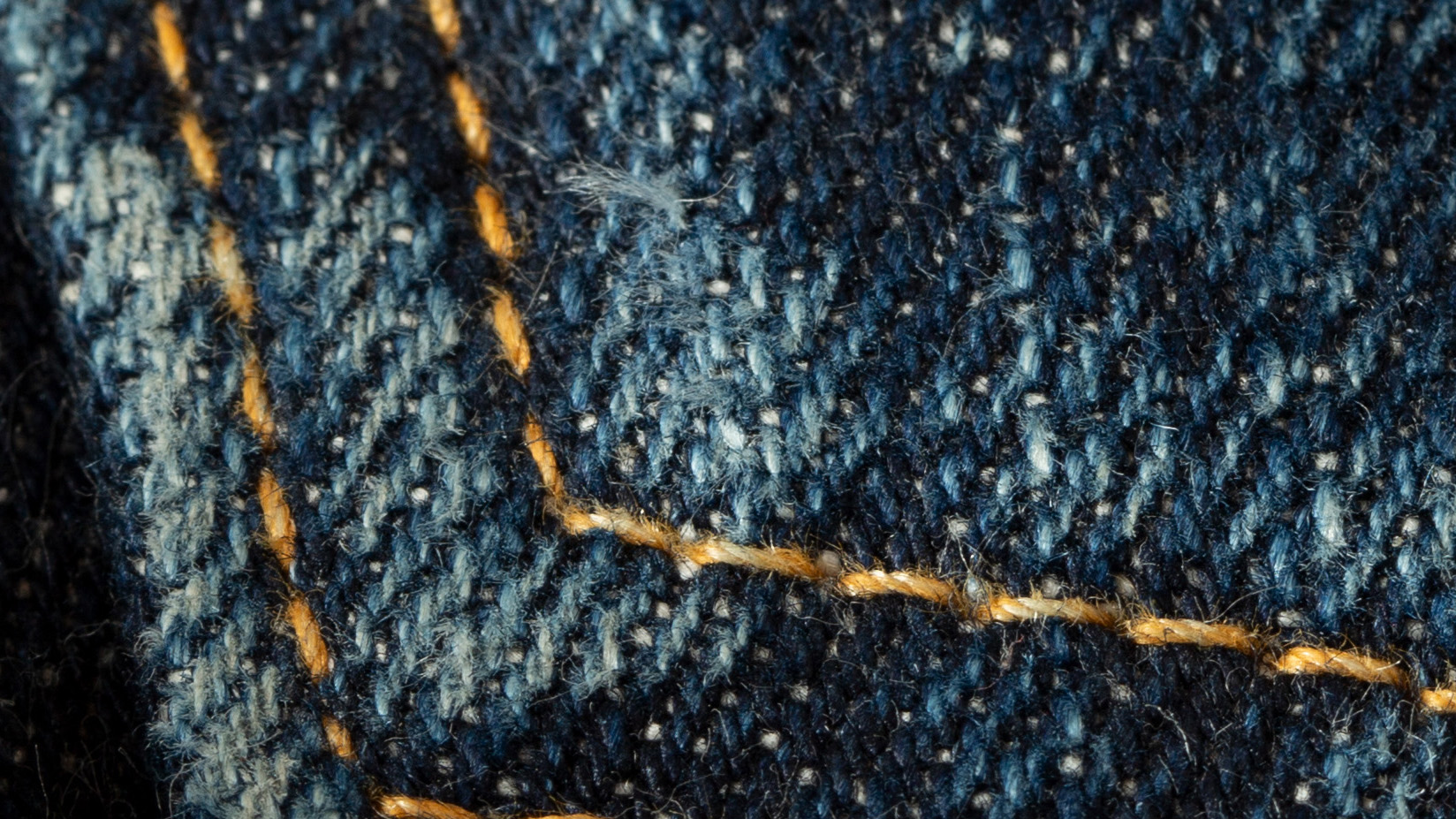
This technique preserves a lighter cotton core. Since indigo does not penetrate as deeply, it develops high-contrast fades over time. It is one of the most sought-after qualities when investing in a high-quality pair of jeans: the way it evolves with wear, becoming uniquely your own.
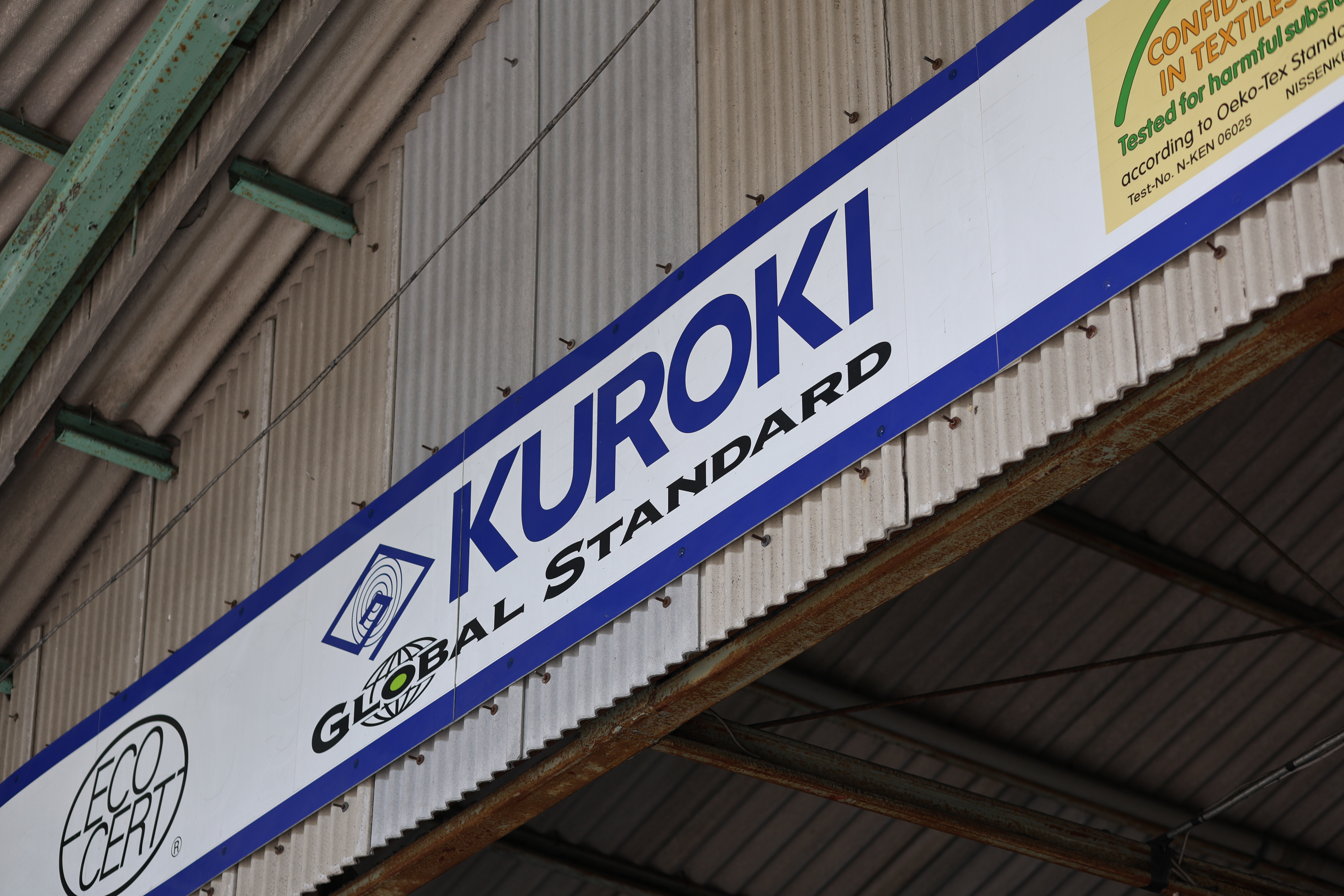
En juin 2025, we had the privilege of visiting Kuroki Mills in Ibara, in Okayama Prefecture, thanks to Seiji-san, head of FOB Factory.
A historic Japanese denim manufacturer, Kuroki is renowned for its exceptional expertise in selvedge weaving and rope dyeing. Many brands develop their fabrics there, including ONI Denim.
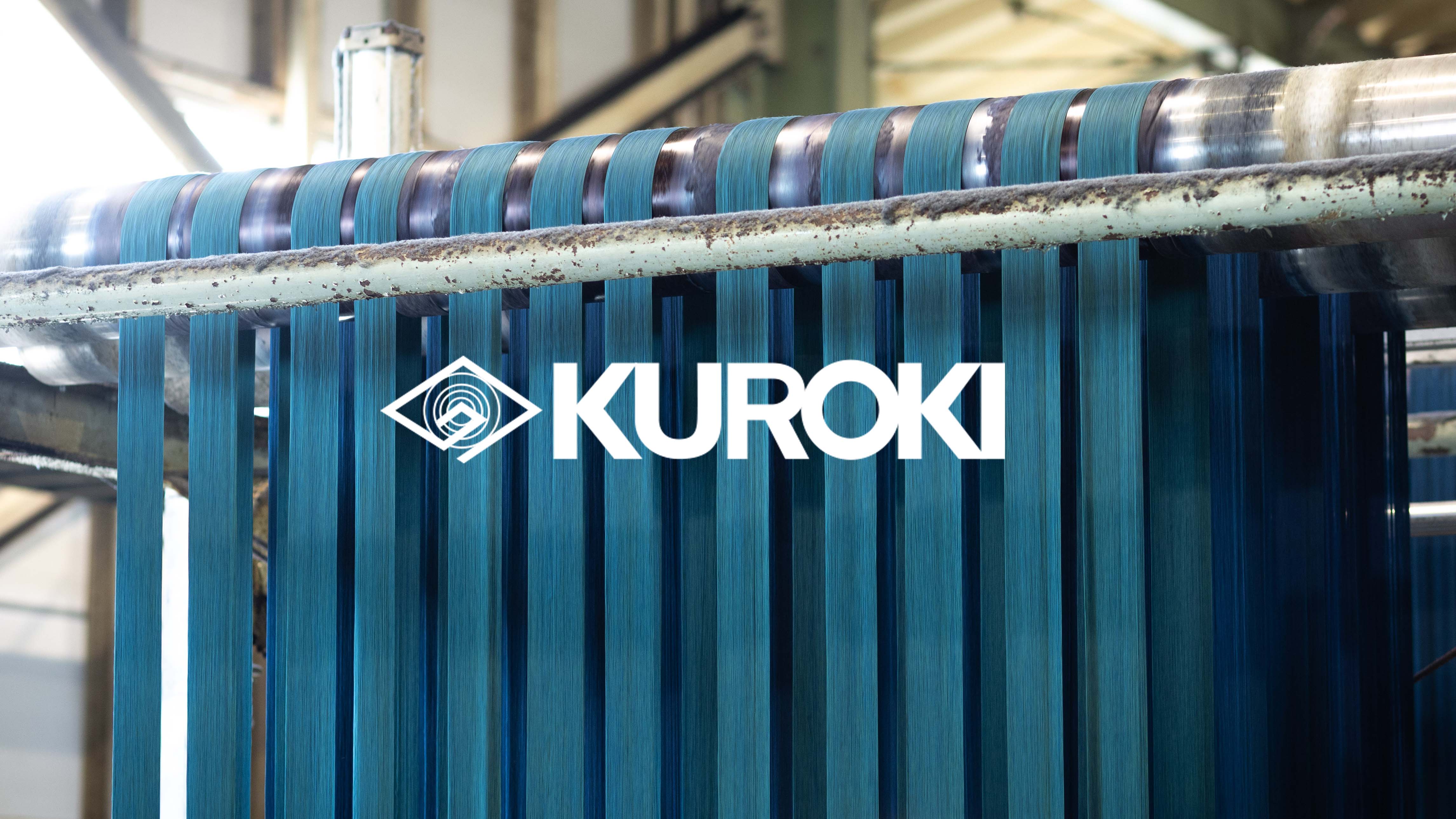
Below is a video filmed during the visit showing the full process of preparing the yarn bobbins that will later be used for selvedge weaving:
We observe white yarns repeatedly dipped into indigo, then oxidized in open air. The color gradually shifts from green to deep blue: one of the visual signatures of rope dyeing.
Awa Shōai-zome: exceptional artisanal indigo
While rope dyeing follows a highly controlled industrial logic, Awa Shōai-zome belongs to another realm: rare textile craftsmanship.
Originating in Tokushima, this method uses naturally fermented indigo derived from the plant.
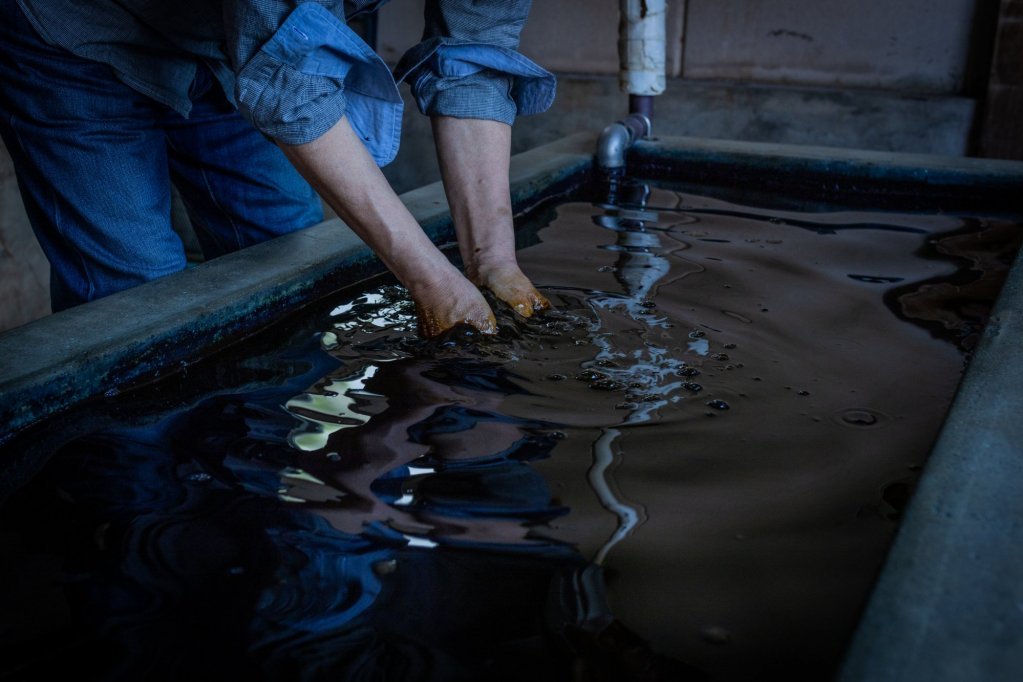
Each yarn is hand-dipped, pressed, oxidized, and re-dipped many times. This slow process produces depth of tone and nuances that cannot be standardized.
Below is a video showing traditional indigo dyeing:
A single immersion produces a light blue. Repeated 10 to 20 times, the process achieves deep blues while preserving unique natural variations.
Preserving a rare know-how
This video illustrates the full process: indigo leaf cultivation, fermentation, dyeing, and final weaving.
A group of young enthusiasts, committed to preserving this endangered tradition, founded BUAISOU, now a leading reference in Japanese artisanal indigo.
Oishi-san on Awa Shōai-zome and natural indigo at Kuroki
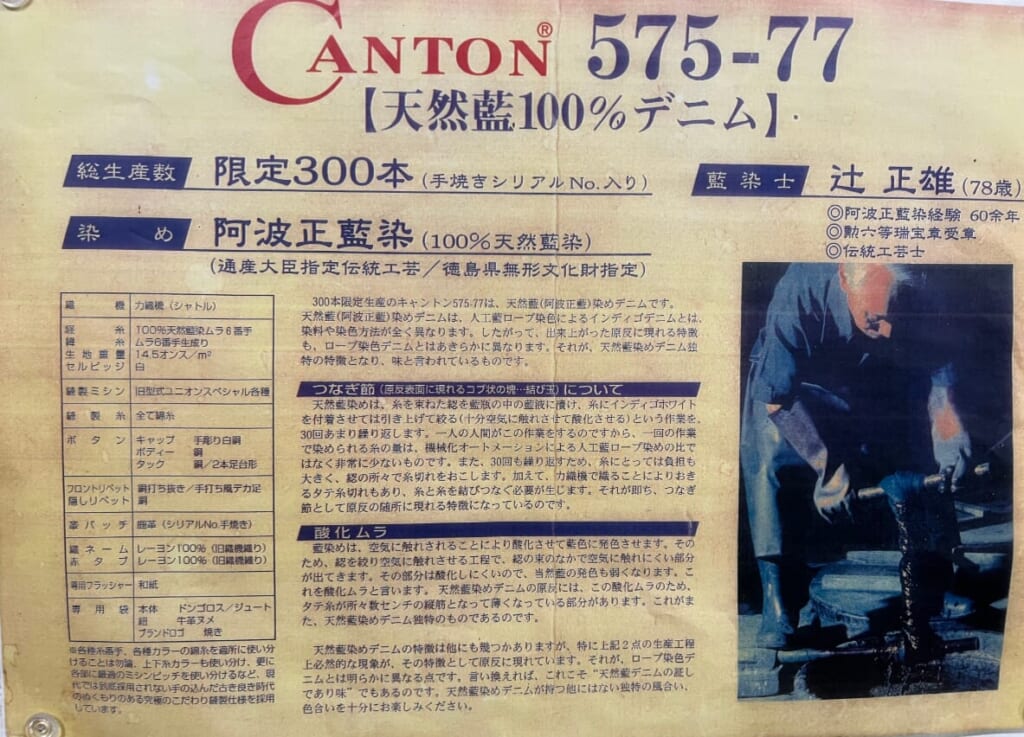
“About 35 years ago, Kuroki sought to produce denim using Awa Shōai-zome and consulted a dyeing workshop in Tokushima. At the time, they worked with Masao Tsuji, a master recognized as a Living National Treasure, who immersed thick yarns into indigo baths and twisted and pressed them dozens of times to create naturally dyed yarns. These yarns were then used by Kuroki on their shuttle looms to produce 14 oz denim dyed with Awa Shōai-zome.
At that time, I was still planning director at CANTON, and we produced a limited series of 250 pieces under the reference CANTON-575-Awa Shōai. Even then, these jeans sold for around 60,000 yen and sold out very quickly.
The indigo dyeing process involves fermenting leaves of Polygonum tinctorium (the indigo plant) in an indigo vat, repeatedly dipping and pressing the yarns, and repeating this process until the color gradually fixes through oxidation-reduction reactions.
The yarn produced using this Awa Shōai-zome method is a unique natural indigo, but because it is pressed repeatedly, the dye penetrates to the core of the fiber. As it is manual work, large-scale production is impossible, making the fabric extremely expensive.
In the past, many farmers cultivated indigo leaves and produced fermented indigo balls, to the point that a region was named Aizumi-cho in Tokushima Prefecture. Over time, most of these farms disappeared, and today only a few workshops remain.
This is why Kuroki considered developing a natural indigo rope dye process. With rope dyeing, the color does not fully penetrate the yarn, allowing a lighter core—an innovative idea.
However, as you saw during your visit to Kuroki, large rope dye machines require huge investment, and if fermented leaves or indigo solids are used directly, residues can damage the machines.
The solution was to create natural indigo blocks. Unlike traditional Japanese indigo, these are made in large vats where people stomp the indigo leaves, and the liquid is extracted and formed into blocks. These blocks make it possible to perform natural indigo rope dyeing without damaging the machinery. As a result, several ONI Denim jeans were produced using natural indigo rope dye.
Thus, although both use natural indigo, Awa Shōai-zome and Kuroki’s natural indigo rope dye are completely different. Rope dyeing can be produced in larger quantities and is slightly more expensive than pure synthetic indigo, but remains relatively accessible. This is why ONI Denim jeans in Awa Shōai-zome and natural rope dye have different price points.
In the past, garments such as judo uniforms and sashiko fabrics were also made with natural indigo yarns, but today they are almost exclusively made with pure synthetic indigo.”
The ONI 274 “Awa Shōai” case
Produced in only 186 pieces, the ONI Denim 274 “Awa Shōai” is now sold out.
It nonetheless remains an excellent example of what Japanese textile craftsmanship can achieve at its highest level.
Developed exclusively for ONI, this denim featured:
- exceptional depth of blue
- visible natural irregularities
- strong texture and character
- a unique evolution through wear

The production of an Awa Shōai denim batch can require over a year of work, including indigo preparation, repeated yarn dyeing, drying, warping, and slow weaving on traditional looms.
A living craft
Although this model is no longer available, we continue to carefully select ONI Denim jeans and other Japanese references highlighting natural dyes, rare textures, and limited production runs.
Whether through modern rope dyeing or traditional Awa Shōai-zome, indigo dyeing perfectly illustrates the richness of Japanese textile craftsmanship.
Understanding these techniques allows us to see selvedge denim differently: not as a simple garment, but as the result of a long human, technical, and cultural process.
We warmly thank Seiji-san for the exceptional visit to Kuroki, as well as Oishi-san for generously sharing his experience.