

KINARI — A New Chapter in the History of Flâneurs
The Autumn/Winter 2026/2027 season marks an important milestone in the history of Flâneurs.
Many new projects will come to life, including our Made in Scotland line Flâneurs Knitwear, as well as two new brands joining our selection: Nigel Cabourn and Remi Relief.
But above all, this season marks a major milestone: the birth of KINARI.
For more than twenty years, Flâneurs has travelled across Japan in search of clothing that embodies the very best of Japanese craftsmanship.
This work has led us to discover numerous workshops, visit factories, and exchange ideas with weavers, garment makers and manufacturers. Over time, our eye has become more refined, and we have learned to understand why certain garments continue to develop more character even after years of wear.
These encounters have also led to numerous exclusive productions. At the time of writing, we have developed a large number of collaborations, notably with Momotaro, Japan Blue, Naked & Famous, FOB Factory, Beams+, XX Development, ONI Denim and Good On.
Today, we feel the time has come to take a new step by creating our own label.
This is how the idea for Kinari was born.
In truth, the project has been in development for several years, and as it gradually took shape, we searched for a name that could simply express the philosophy behind each of our projects.
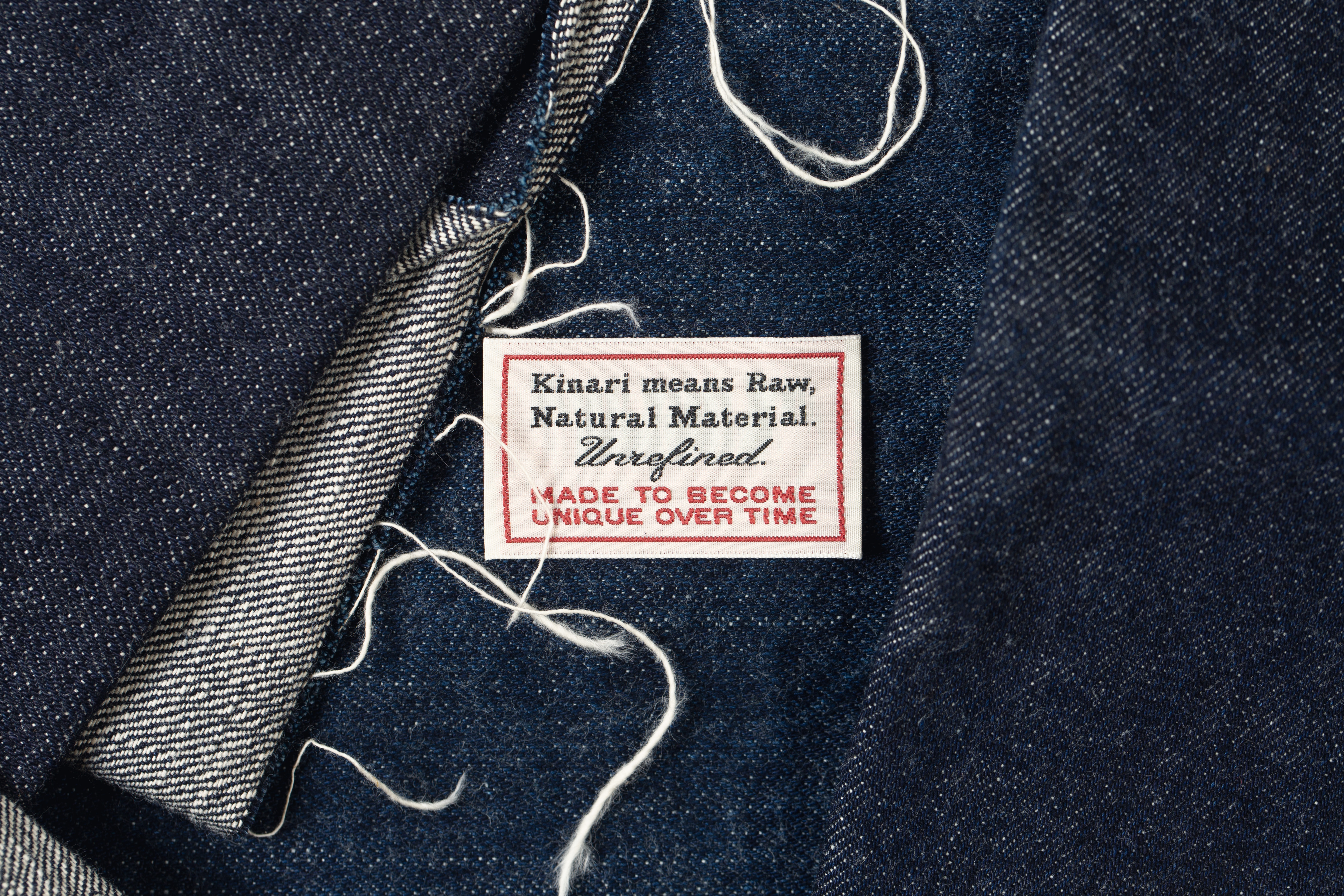
We chose the Japanese word 生成り (Kinari), a term that will probably be familiar to regular Flâneurs customers. In Japanese collections, it refers to the natural colour of a fibre or fabric left in its raw state, before any bleaching or dyeing process. A definition that perfectly sums up our approach: starting with the material in its most authentic state to create a garment designed to last.
Every Garment Begins with a Fabric
Since 2003, when we opened our first store, thousands of fabrics have passed through our hands. This experience has allowed us to develop a critical eye and a particular sensitivity to materials.
This is undoubtedly the most valuable legacy of our work as a retailer.
It has also enabled us to understand the particularities of the Japanese wardrobe and the differences between the Japanese and European markets.
Japan has an extraordinarily rich clothing culture, but it remains an insular market with its own standards. Most of the brands we carry are small, independent companies deeply rooted in their domestic market, naturally developing their collections according to the expectations of Japanese customers.
This can sometimes be seen in the cuts and proportions: sizing that differs from Western standards, shorter rises, narrower sleeves, or collar openings that are less suited to European habits and body shapes.
With Kinari, our ambition is precisely to create a bridge: to preserve what we appreciate most about Japanese manufacturing — the exacting attention paid to materials, the precision of the techniques and a respect for taking time — while developing cuts and proportions suited to the expectations of our European customers.
We have also devoted a significant part of the development process to textile sourcing, with one simple objective: to work exclusively with fabrics made in Japan.
Each fabric is selected for its character, texture, construction and its ability to develop a natural patina over time.
We are not looking to offer an exhaustive collection. We prefer to develop a small number of pieces, take the time to perfect them, and gradually build a coherent wardrobe.
Three Partners, Three Complementary Areas of Expertise
From the outset, we chose not to multiply the number of manufacturers we work with, but instead to surround ourselves with three partners, each recognised for a specific area of expertise. These manufacturers usually work exclusively for the Japanese market, but the relationships of trust we have built over time have enabled us to develop privileged collaborations with them.
Ibara and Kojima Factories 井原工場・児島工場
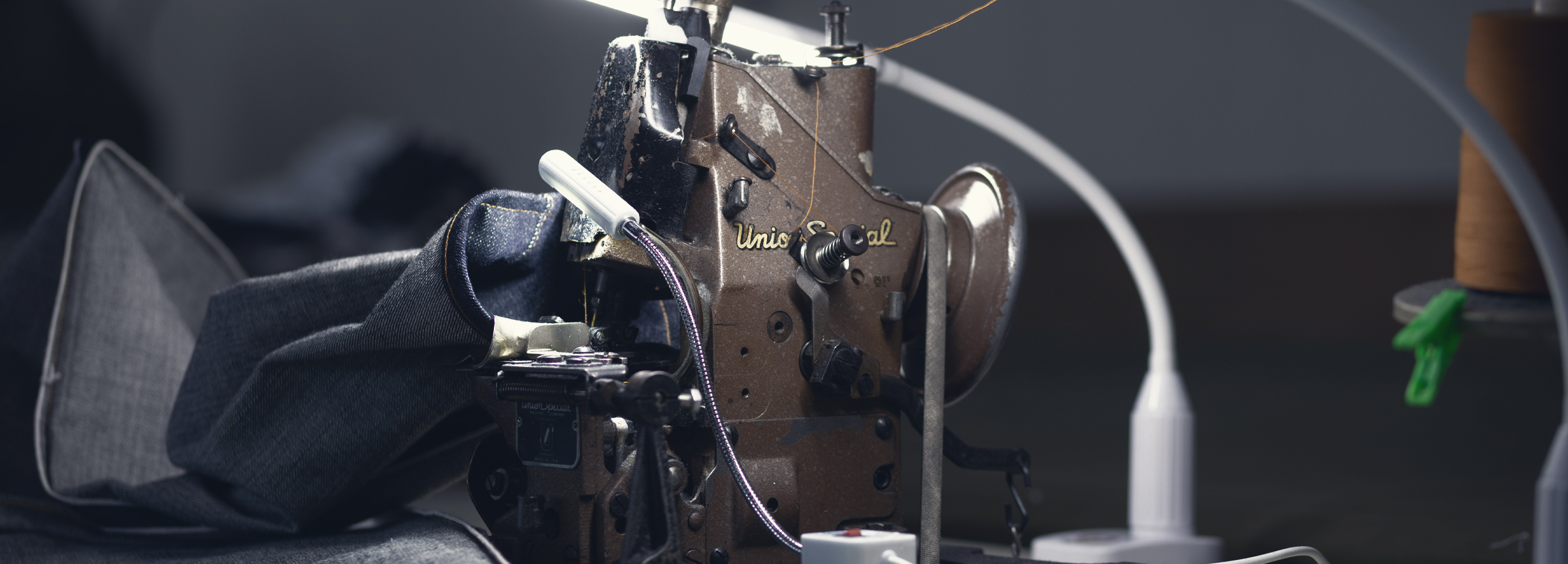
The first is a garment manufacturer founded in 1995, with factories located in Ibara and Kojima, in Okayama Prefecture.
For enthusiasts of Japanese denim, these two cities immediately evoke one of the historic heartlands of textile manufacturing in Japan. Weavers, garment factories, dyeing specialists and machine manufacturers all operate within just a few kilometres of one another, creating a unique ecosystem in which every stage of production can be controlled with great precision.
It is with this workshop that we have built our closest partnership. A relationship that goes far beyond the framework of a simple professional collaboration. This closeness lies at the heart of the Kinari project: without this encounter and the history we share, the brand quite simply would never have come into being.
We also share the same vision of clothing: everything begins with the fabric.
Each material is developed together with weavers from the region before the garment itself takes shape, in a constant search for balance between authenticity, functionality and durability.
The sewing techniques, vintage machines and attention paid to finishing are never ends in themselves, but rather the means of creating garments that gain character over time.
The inaugural collection will include a CPO shirt as well as three models of selvedge jeans, which are still under development.
Osaka Factory 大阪工場
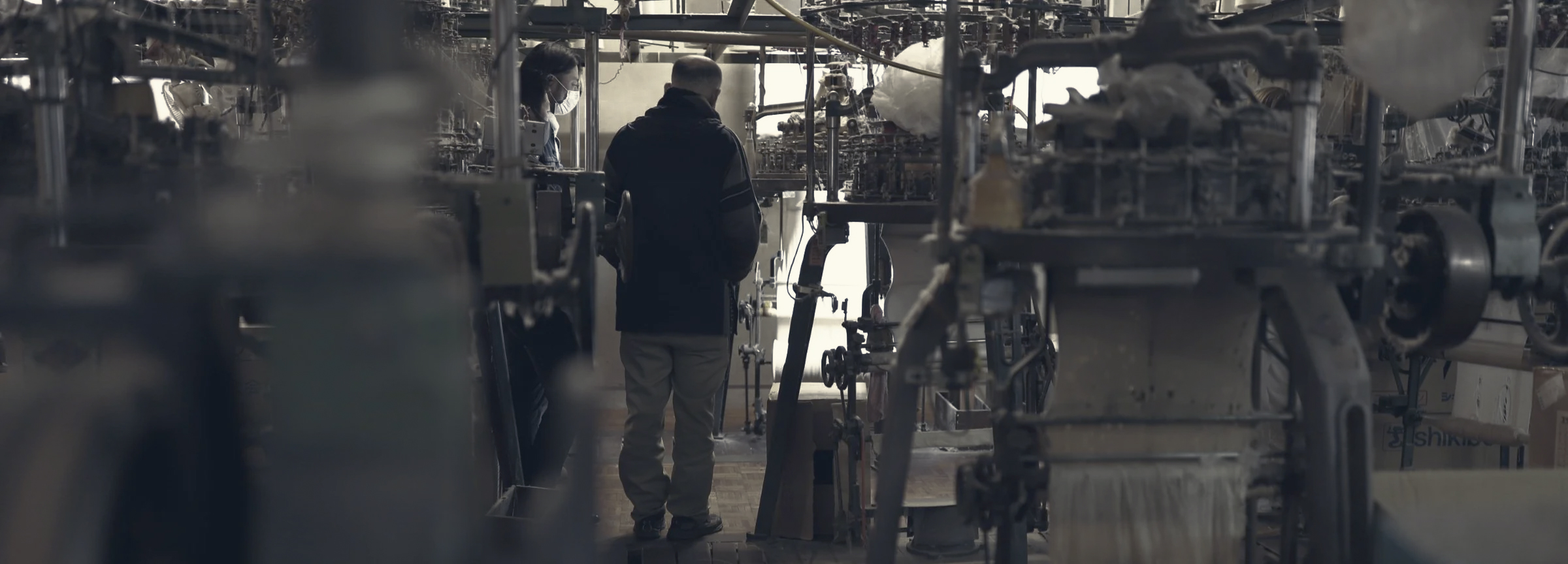
For our T-shirts and sweatshirts, we work with a factory whose history is closely intertwined with that of Japanese knitwear.
Founded in 1926, it has devoted nearly a century to the development of jersey fabrics, from the creation of the fabric itself through to the construction of the finished garments. Over the years, it has developed an in-depth understanding of every stage involved in creating jersey with real character: the choice of yarns, knitting techniques, construction densities and dyeing processes.
Its expertise is based in particular on its mastery of circular knitting. Certain machines and processes that have now become extremely rare make it possible to create fabrics with a presence and character that simply cannot be achieved using more modern production methods.
Among the first Kinari developments is a 7.5oz circular-knit jersey T-shirt.
Knitted in its raw state, without bleaching the cotton, it retains all the authenticity of the natural fibre and develops a unique, slightly slubby appearance.
This choice directly echoes the name Kinari. We wanted to preserve this idea of a material in its most authentic state, allowing the fabric to fully express its natural texture and irregularity.
We have also developed several packs of 5.5oz circular-knit T-shirts, conceived as fundamental pieces for the everyday wardrobe.
Tokyo Factory 東京工場
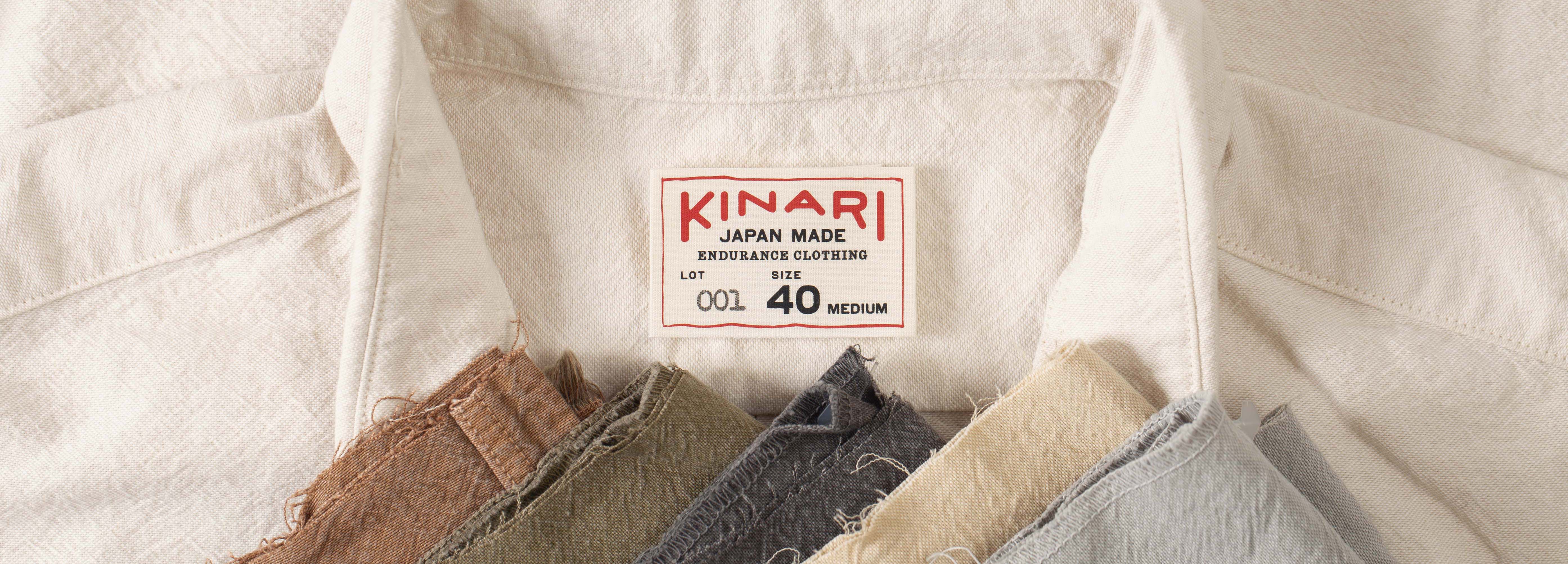
Our third partner is based in Tokyo, in the historic district of Sumida, an area long associated with Japanese manufacturing craftsmanship.
Founded in the 1950s, this workshop has more than seventy years of experience in shirtmaking.
Its history is built on an in-depth knowledge of Japanese textile production and complete mastery of the different stages of manufacturing.
Together with them, we have had the opportunity to meet numerous Japanese fabric manufacturers and to place the search for the right material at the heart of every new project.
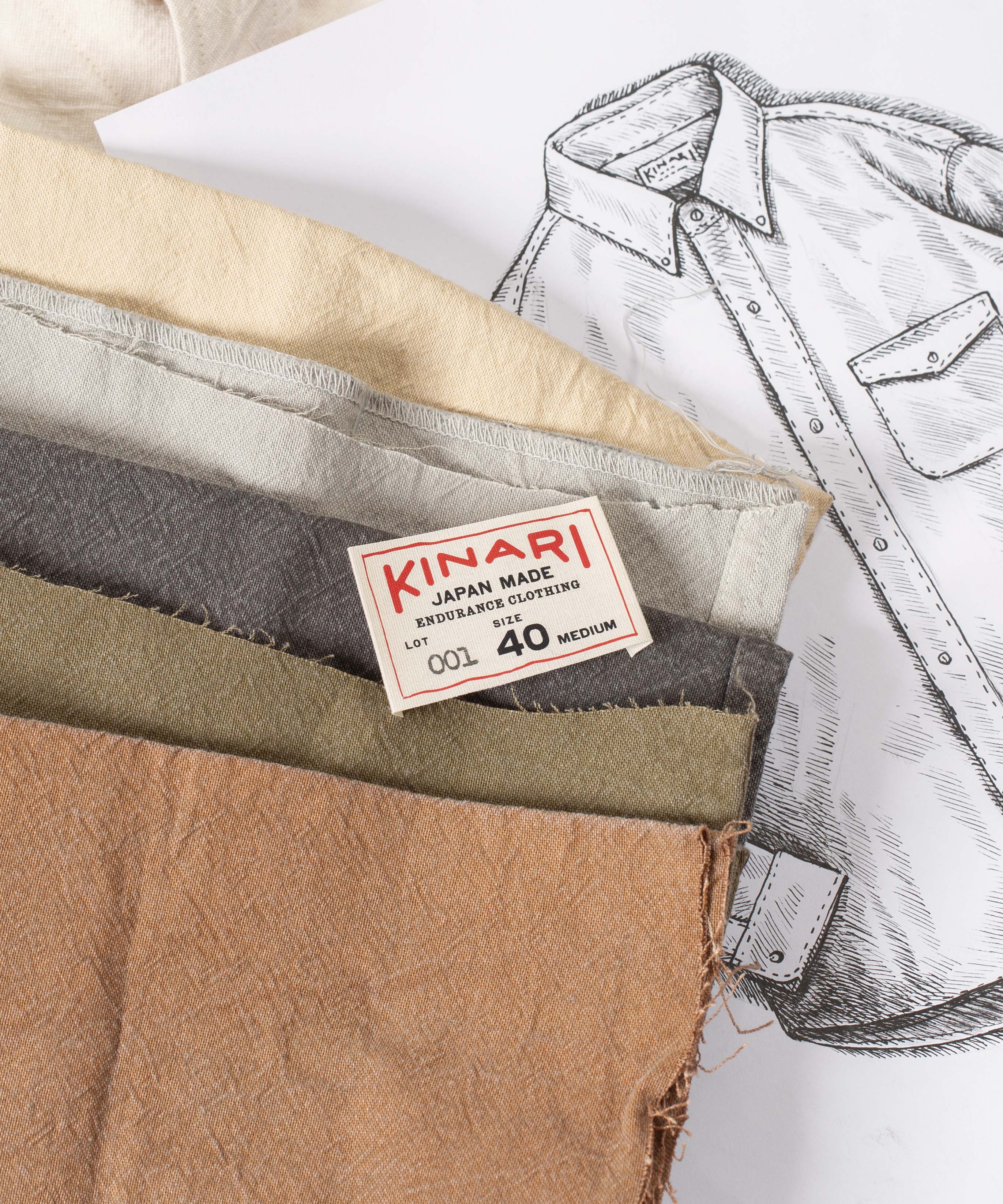
We are particularly proud of a "Mug Washer" cotton shirt developed using a pigment-dyeing process, a project that required numerous trials and prototypes before we achieved the result we were looking for.
A Collection Built Step by Step
The first Kinari pieces will arrive at Flâneurs during October 2026.
Further developments will be added to the collection throughout the Autumn/Winter season.
To follow the evolution of the project and stay informed about upcoming releases, you can follow the Instagram account [https://www.instagram.com/kinari.clothing/] or subscribe to the newsletter on the official Kinari website [https://www.kinari-clothing.com/].
For the time being, Kinari will be available exclusively at our Flâneurs store in Rennes and on our website.
This choice is a natural extension of our approach: taking the time to develop each piece, tell its story, and ensure complete consistency between what we create with our Japanese partners and the way these garments are ultimately presented.
Kinari is built around a simple idea: a beautiful garment is also one that reveals itself over time.
This philosophy is summed up in our signature: Endurance Clothing.
Kinari & the Flâneurs family